- Popular patterns include slate, brick, ashlar, herringbone, and cobblestone
- Stamped concrete lasts 25–30 years with proper sealing and maintenance
- Suited to patios, driveways, pool decks, and walkways
- Requires professional application, DIY stamping often fails
concrete stamps san diego, Concrete stamps in San Diego allow homeowners and businesses to transform ordinary concrete into decorative surfaces that replicate stone, brick, wood, or custom patterns. Stamped finishes can be more affordable than natural stone or pavers while delivering similar visual impact. Durability ranges from 25 to 30 years when sealed and maintained properly. Here’s what you need to know before selecting a stamped finish for your driveway, patio, or pool deck.
What Are Concrete Stamps and How Do They Work?
Concrete stamps are heavy molds or plates pressed into freshly poured concrete while it’s still workable. The stamping process creates a textured surface that mimics natural materials like flagstone, slate, brick, or wood grain. A concrete contractor pours the slab, waits for the surface to reach the right consistency (usually 2–4 hours depending on weather), then presses the stamps into the surface in a pattern that covers the entire area.
The process requires precision timing. Pour too early and the concrete is too soft, the stamp sinks too deep or tears. Pour too late and the concrete hardens, making stamps difficult to press and leaving shallow impressions. In San Diego’s warm climate, summer pours can set faster than winter pours, affecting the window for stamping.
After stamping, the concrete cures for 7 days before foot traffic is allowed. Most contractors apply a release agent (usually a dry powder or liquid) before stamping to prevent the mold from sticking. A sealer is applied after full cure to lock in color and protect against UV fading and moisture.
Popular Stamped Concrete Patterns and Finishes
San Diego contractors offer dozens of stamp patterns. The most common fall into these categories:
Slate and Flagstone
Irregular rectangular tiles with grout joints. Very popular for patios and pool decks. Pattern is forgiving with color variation.
Ashlar (Cut Stone)
Large, uniform rectangular blocks with clean joints. More formal appearance. Often used on driveways.
Brick and Running Bond
Traditional brick-size rectangles in staggered pattern. Classic look for walkways and patios. Highly recognizable.
Herringbone
Rectangular tiles set at 45-degree angles in zigzag. High visual impact but requires precise stamping.
Cobblestone (European)
Rough, multi-sided stones in random pattern. Rustic, uneven surface mimics old European streets.
Wood Plank
Grain texture mimicking hardwood boards. Less common but striking for patios. Requires high skill.
Pattern choice affects both visual result and cost. Simpler patterns like slate take less time to stamp and have more forgiveness if spacing is slightly off. Complex patterns like herringbone demand more labor and precision, increasing the price per square foot.
Concrete Stamps vs. Other Decorative Finishes
| Finish Type | Durability | Maintenance | Suited To |
|---|---|---|---|
| Stamped Concrete | 25–30 years | Seal every 2–3 years | Driveways, patios, pool decks |
| Stained Concrete | 20–25 years | Seal every 2–3 years | Interior, low-traffic areas |
| Exposed Aggregate | 25–30 years | Seal every 2–3 years | Driveways, pool decks |
| Polished Concrete | 20–25 years | Seal every 1–2 years | Indoor, modern spaces |
| Pavers (Concrete) | 25–35 years | Low; re-sand joints as needed | Driveways, patios, high-traffic |
| Pavers (Natural Stone) | 30–50+ years | Low; re-sand joints as needed | Premium patios, driveways |
Stamped concrete ranks high on value because it costs less than pavers or natural stone but delivers a similar visual effect. Unlike stained concrete, stamped finishes add tactile texture and depth. Stamped surfaces show color variation better than a flat finish, making them forgiving of minor imperfections and shading variations common in San Diego’s intense sun.
Ready to Upgrade Your Concrete?
See which stamped finish works best for your San Diego property
Cost Breakdown: What Affects Stamped Concrete Pricing in San Diego
Concrete stamps in San Diego pricing varies based on several factors.
Subbase and Site Prep
Removing old concrete, grading soil, and compacting a 4-inch subbase adds cost. Slope correction for drainage can increase prep costs. In neighborhoods like Mission Valley or Scripps Ranch where soil is dense clay, additional preparation may be needed.
Pattern Complexity
Complex patterns like herringbone or custom combinations cost more than simple patterns like slate or running bond brick. The stamper spends more time aligning tiles and may need to cut stamps at edges, increasing labor.
Color and Stain
Base concrete color is included in the stamp cost. Adding color stain during finishing adds cost, as does a multi-color antiquing effect (darker grout joints, lighter stone faces). Color enhances the natural-stone look, especially in La Jolla or Coronado where homeowners expect premium finishes.
Size and Access
Smaller projects (under 500 sq ft) may carry a per-sq-ft premium because the contractor must mobilize equipment for less area. Large driveways (2,000+ sq ft) see lower per-sq-ft costs. Tight access in older neighborhoods near downtown San Diego or narrow side yards may limit equipment, raising labor costs.
Sealing
A quality penetrating sealer applied after cure is essential and adds to the cost. This is often bundled into the project quote but should be confirmed separately.
Durability and Lifespan of Stamped Concrete
Stamped concrete in San Diego lasts 25–30 years if sealed and maintained. The texture itself doesn’t wear away because it’s created during the pour and is integral to the slab. However, the seal protecting the surface will degrade over time, especially in San Diego’s sunny, dry climate.
Factors That Shorten Lifespan
- Heavy vehicle traffic: Repeated tire loads cause micro-cracking and accelerate seal breakdown
- UV exposure: San Diego’s intense sun fades color and degrades sealers faster than in other climates
- Freeze-thaw cycles: Rare but possible in San Diego winters; water trapped in concrete expands and causes spalling
- Poor drainage: Standing water accelerates deterioration and can cause pitting or discoloration
- Lack of sealing: Unsealed stamped concrete is porous and absorbs stains, oil, and moisture, leading to cracks within 10–15 years
Extending Stamped Concrete Life
Seal every 2–3 years. This is the single most important maintenance step. High-traffic areas like driveways may need seal renewal every 2 years, while low-traffic patios can go 3–4 years. Apply a penetrating (not topical) sealer so water and air can still reach the concrete. Avoid salt-based deicers in winter; use sand or calcium chloride instead. Keep gutters clean to prevent water ponding around edges.
Maintenance Requirements and Seasonal Care in San Diego
Stamped concrete requires less maintenance than natural stone or pavers, but it’s not maintenance-free.
Annual Care
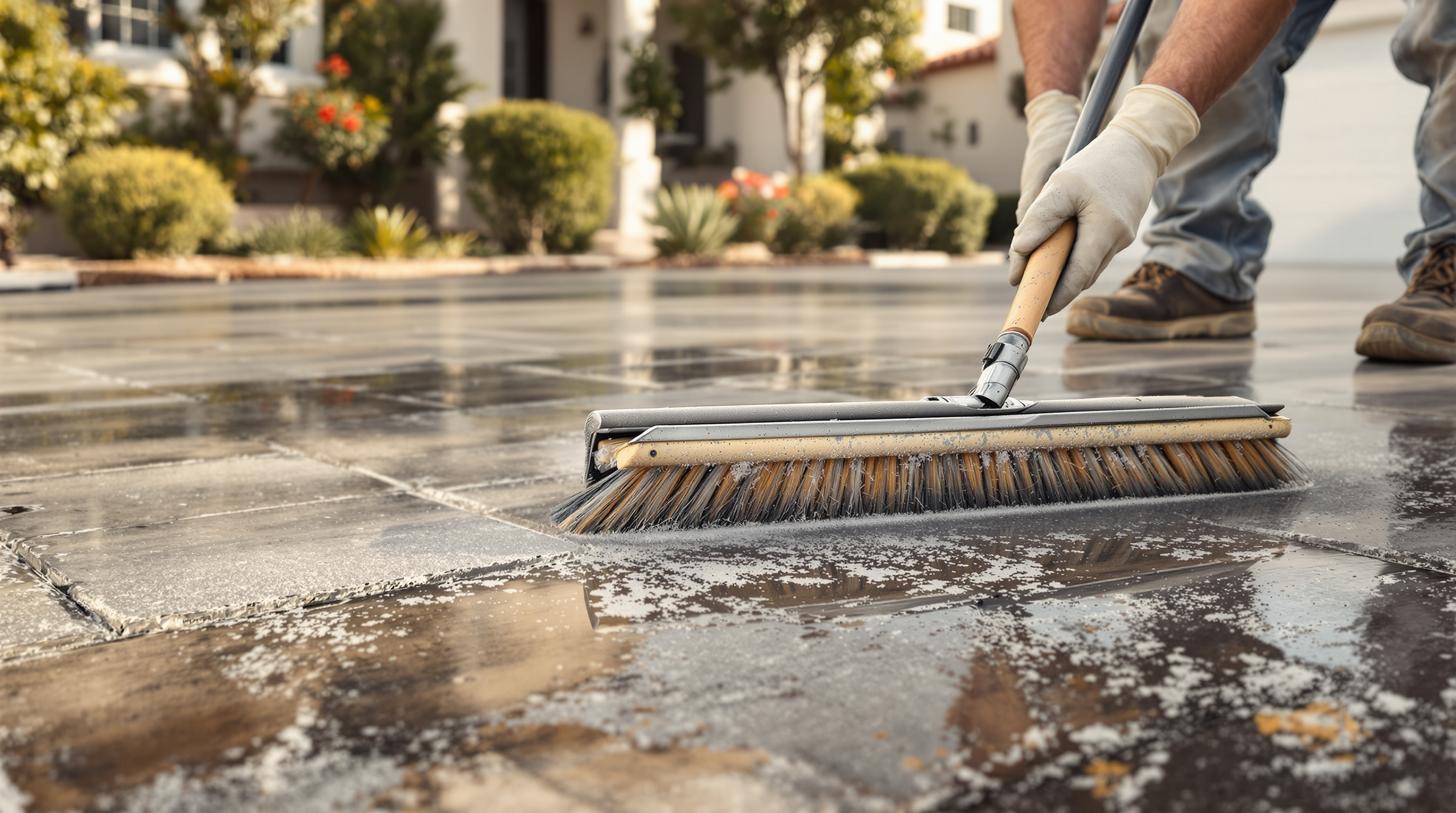
- Sweep or blow off debris monthly to prevent staining and moisture trapping
- Rinse with a garden hose (not a pressure washer above 2000 psi) to remove dirt and salt spray if near the coast
- Inspect sealer condition. If water beads on the surface, sealer is intact. If water absorbs, reseal within 3 months
- Check grout joints (if stamped to include joints) for moss or algae growth in shaded areas; scrub with a brush and mild detergent
Summer in San Diego
Summer heat can cause slight expansion. This is normal and doesn’t damage properly installed stamped concrete. If cracks appear, monitor them, hairline cracks under 1/8 inch wide are cosmetic. Cracks wider than 1/4 inch should be sealed with concrete caulk to prevent water infiltration.
Winter Concerns
San Diego winters are mild, but rare frost can affect poorly sealed concrete. Ensure adequate sealing before November. If salt is used on nearby surfaces (parking lots, road salt spray), rinse the stamped surface monthly to prevent salt-related deterioration.
Choosing a Stamped Concrete Contractor in San Diego
Stamped concrete quality depends entirely on contractor skill. Poor execution results in misaligned joints, inconsistent depth, visible seams, or color blotching. Here’s what to look for:
Licensing and Insurance
Verify CSLB (Contractors State License Board) license. A valid license number is non-negotiable, it proves the contractor is bonded and insured. Ask for proof of liability and worker’s compensation insurance before signing.
Experience with Stamped Finishes
Stamping is a specialized skill. Ask potential contractors how many stamped projects they complete annually. A crew that stamps weekly will have better tool maintenance and technique than a crew that stamps once a year. Request references from San Diego projects completed within the past 3 years.
Portfolio and Site Visits
Ask to see photos of past work. Better yet, request to visit one or two completed projects in person (with owner permission) to inspect color consistency, joint alignment, and surface texture quality. Look for uniform depth and minimal visible seams.
SD Concrete Pros is a San Diego concrete company; work is installed by our licensed partner specializing in stamped finishes for residential and commercial properties across the county. Our crew has expertise in color application, joint alignment, and long-term durability.
Common Problems and How to Fix Them
Fading and Color Loss
Caused by UV exposure and seal degradation. Solution: Reapply a high-quality penetrating sealer. Consider adding a UV-resistant component to the sealer formulation. Darker colors fade faster than lighter tones in San Diego’s intense sun.
Chipping and Spalling
Small surface chips usually occur at edges or where freeze-thaw cycles occur (rare in San Diego but possible in coastal areas). Solution: Fill with concrete filler or epoxy patching compound. For widespread spalling, resurfacing may be needed. See our guide on why stamped concrete chips and how to prevent it.
Staining and Discoloration
Oil, rust, algae, or mineral deposits can mar the surface. Solution: For organic stains (algae, moss), scrub with a 1:1 bleach solution and rinse thoroughly. For oil stains, use a degreaser and allow it to sit for 24 hours before rinsing. For rust stains, apply a rust remover per product instructions. Always test on an inconspicuous area first.
Cracks
Fine hairline cracks (under 1/8 inch) are cosmetic and don’t affect durability. Wider cracks indicate underlying settlement or poor subbase. Solution: For hairline cracks, apply concrete caulk matched to the surface color. For cracks 1/4 inch or wider, consult a contractor, they may indicate foundation movement and require concrete resurfacing or base stabilization.
Frequently Asked Questions About Concrete Stamps San Diego
How long does it take to install stamped concrete?
Can you stamp existing concrete?
Is stamped concrete slippery when wet?
Can you change the color of stamped concrete?
How much does stamped concrete cost compared to pavers?
Get Your Stamped Concrete Project Started Today
Free estimates for driveways, patios, and pool decks across San Diego County
619-848-3880 Related: San Diego Concrete Resurfacing: Cost, Methods, and When to Resurface Related: How to Choose the Right Concrete Driveway Contractor in San Diego Related: Concrete Repair Services in San Diego: Cracks, Damage, and More Related: The Complete Guide to Concrete Resurfacing in San Diego: Restore Your Driveway Without Full Replacement
Related Articles
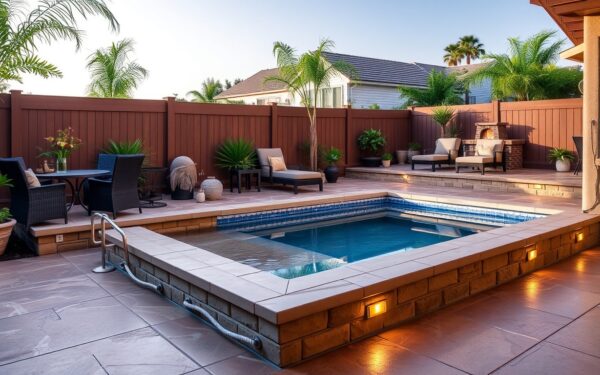
Stamped Concrete Design Ideas to Transform Your San Diego Patio or Pool Deck
Explore the best stamped concrete design ideas for San Diego patios and pool decks. From natural stone patterns to custom color blends, discover how stamped concrete can elevate your outdoor living space.
Read More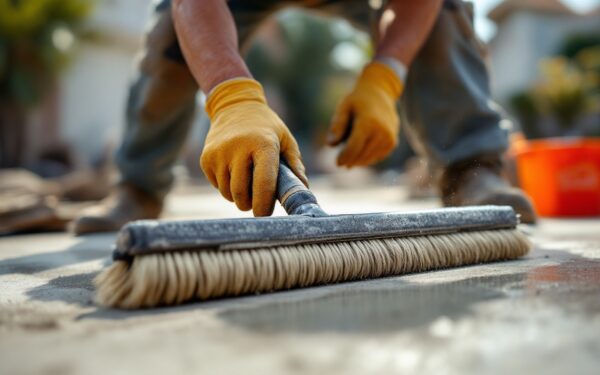
Decorative Concrete San Diego
Decorative concrete in San Diego transforms driveways, patios, and pool decks with stamped patterns, stains, and custom designs. Learn costs, options, and durability for your project.
Read More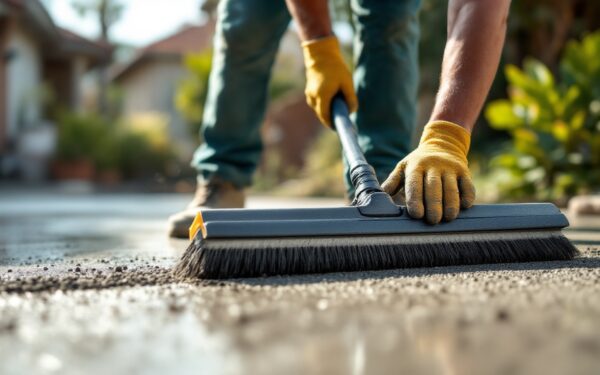
Concrete Patio San Diego: 2026 Guide to Design & Installation
Concrete patios in San Diego cost $8–$15 per square foot installed. Learn design options, permit requirements, durability in coastal climates, and what to expect from local contractors.
Read More