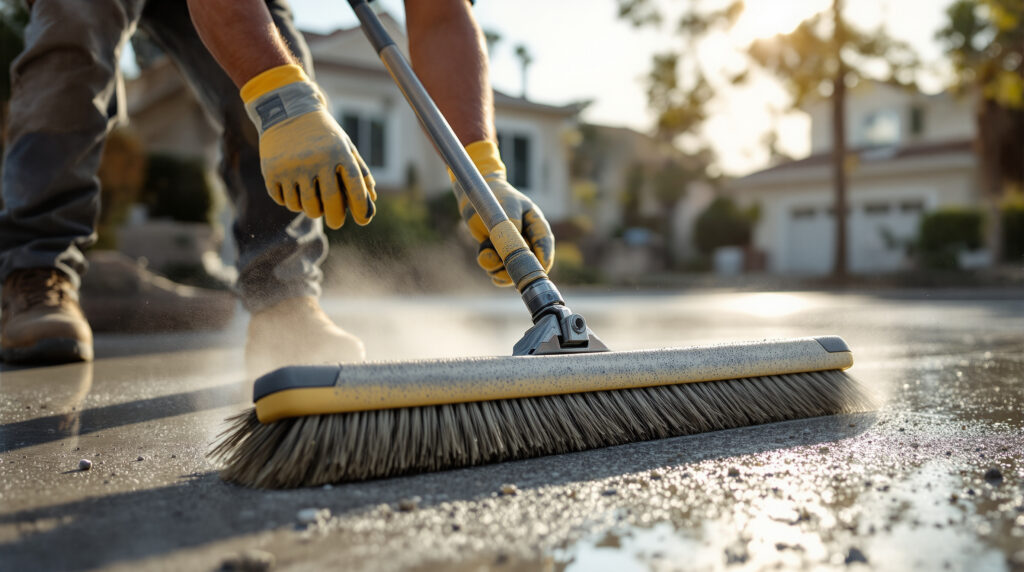
concrete repair san diego, Concrete repair cost in San Diego depends on the damage severity, the area affected, and the repair method used. Here’s what you need to know to assess your repair needs and budget.
- Sinking/uneven concrete: may require mudjacking or concrete leveling
- Typical San Diego job: 2–5 days (depending on complexity and weather)
Common Concrete Damage Types in San Diego
San Diego’s warm, dry climate and occasional heavy rains create specific stress on concrete. Thermal expansion, UV exposure, and salt air (especially near coastal areas like Ocean Beach, Pacific Beach, and La Jolla) accelerate concrete deterioration. Understanding the damage type helps contractors recommend the right repair approach.
Hairline and Surface Cracks
Hairline cracks (under 1/8″ wide) are the most common concrete damage homeowners encounter. They form from concrete shrinkage during curing, minor settling, or seasonal temperature swings. While purely cosmetic at first, water penetrates hairline cracks and freezes, expanding and widening the damage over months or years.
The contractor cleans the crack, applies a concrete crack filler or polyurethane sealant, and smooths it flush. This typically takes 1–2 hours and cures within 24 hours.
Medium and Wide Cracks (1/4″ and Larger)
Cracks wider than 1/4″ indicate deeper movement or structural stress. These often appear in driveways near property lines, along concrete edges, or where the ground beneath has settled. If a crack is wider than 1/2″, it signals potential foundation movement or poor base preparation, common in San Diego homes built on clay soils in neighborhoods like Clairemont, Tierrasanta, and Santee.
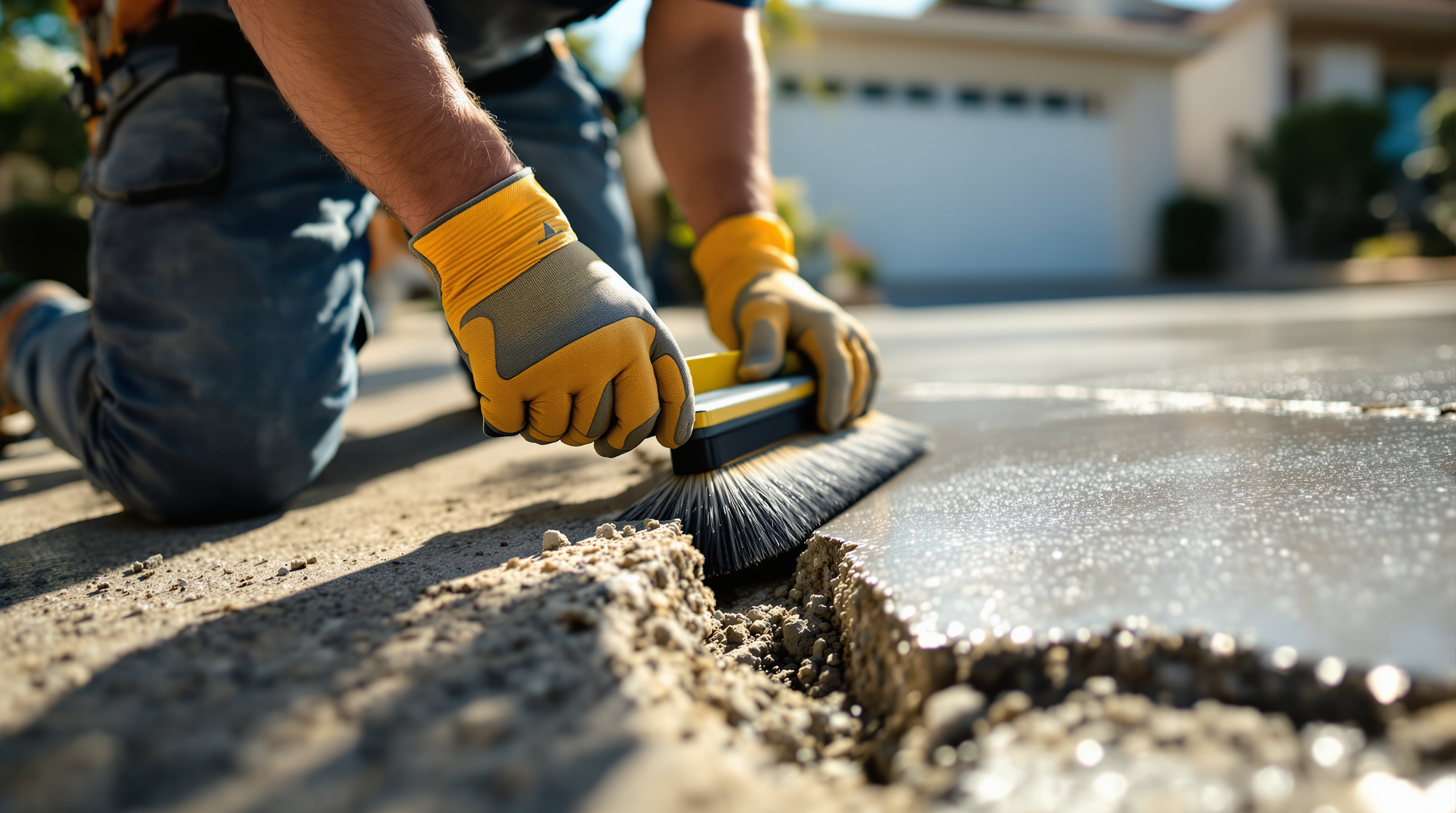
The contractor will chisel out loose concrete, use epoxy injection or concrete patching compound, and often add reinforcement with concrete bonding agents. Wider cracks sometimes require excavation to inspect and stabilize the base layer.
Spalling and Scaling
Spalling is surface flaking or peeling where the top layer of concrete separates in chunks. Scaling is similar but involves thin flakes. Both are caused by freeze-thaw cycles (rare but possible in San Diego winter mornings), salt exposure, or poor air entrainment during the original pour. Concrete that was incorrectly finished or over-troweled is more prone to spalling.
If spalling is shallow (under 1/4″ deep), the contractor grinds and patches. If deep (over 1/2″), the section may need removal and replacement.
Sinking and Uneven Concrete
This is one of the most frequent complaints in San Diego. Concrete driveways and patios sink when the subgrade (the base soil) compacts, erodes, or fails to support the weight above. Poor drainage, broken water lines, or inadequate base preparation all contribute. Homes in Mission Valley, Mira Mesa, and Oceanside often see this issue due to varied soil conditions.
Two main options exist:
- Mudjacking (slab jacking): Hydraulic injection of mud/cement slurry under the concrete lifts it back to grade. Takes 1–2 days, but concrete is safe to use within hours.
- Concrete leveling (foam jacking): Lightweight polyurethane foam is injected beneath the slab, lifting and stabilizing it. More precise and longer-lasting than mudjacking, though slightly pricier.
Concrete Repair Methods
The repair method depends on damage type, structural concerns, and budget. Here’s a practical breakdown:
| Damage Type | Repair Method | Typical Timeline |
|---|---|---|
| Hairline cracks (<1/8″) | Crack sealant/caulk | 1–2 hours |
| Medium cracks (1/4″–1/2″) | Epoxy injection or patching compound | 1–2 days (curing) |
| Wide cracks (>1/2″) | Chiseling, bonding agent, epoxy fill | 2–3 days |
| Spalling/scaling (shallow) | Grinding and patching | 1–2 days |
| Spalling/scaling (deep) | Partial removal and re-pour | 3–5 days |
| Sinking concrete | Mudjacking | 1–2 days |
| Sinking concrete | Foam leveling | 1–2 days |
| Large damaged area | Resurfacing | 3–5 days |
| Severely damaged concrete | Removal and replacement | 5–7 days |
Ready to Fix Your Concrete?
Get an accurate repair estimate from our team
Why San Diego Concrete Fails: Local Climate and Soil Factors
San Diego’s unique environment accelerates concrete wear in ways homeowners often don’t anticipate. Understanding these factors helps you prevent future damage.
Thermal Cycling and UV Exposure
San Diego enjoys 260+ sunny days per year. Concrete expands in the heat and contracts in cooler mornings, especially noticeable in neighborhoods at elevation like Ramona, Julian, and Mount Laguna. Repeated thermal stress creates micro-cracks that gradually link into visible cracks. UV rays also break down the concrete binder over 20–30 years, making the surface more porous.
Prevention: Seal your concrete every 2–3 years to reduce UV penetration and moisture infiltration. A quality sealer helps extend concrete lifespan.
Salt Air Corrosion (Coastal Areas)
Homes in Ocean Beach, Pacific Beach, Mission Beach, and La Jolla face accelerated damage from salt air and fog. Salt penetrates concrete, corrodes any internal rebar or wire mesh, and causes concrete to spall. This is why coastal driveways often show pitting and scaling by year 10–15.
Prevention: Use air-entrained concrete (which includes tiny air bubbles) in new pours. Seal coastal concrete annually. If you live within 2 miles of the beach, budget for more frequent repair cycles.
Poor Soil and Drainage
San Diego soils vary widely, from clay in Clairemont and Tierrasanta to sandy soils in coastal areas to caliche (calcium carbonate layer) in Santee and El Cajon. Poor drainage or clay expansion/contraction causes sinking concrete. Water pooling under a driveway accelerates subgrade failure.
Prevention: Ensure proper grading so water drains away from the concrete. Install or repair gutters and downspouts. If sinking is suspected, inspect the base with ground-penetrating radar before committing to major repair.
When to Repair vs. Replace Concrete
Not every crack requires replacement. Here’s when to repair and when to consider full removal:
Repair If:
- Cracks are less than 1/4″ wide and isolated
- Surface damage is cosmetic (minor spalling)
- Concrete is less than 30 years old
- Sinking is minor (under 1/2″)
- Repair cost is under 50% of replacement cost
Replace If:
- Multiple wide cracks form a pattern
- Concrete is severely spalled or crumbling
- Concrete is over 40 years old with recurring issues
- Sinking is severe (over 1″) and affects multiple sections
- Structural damage is visible (exposed rebar, voids)
A concrete contractor like SD Concrete Pros can help you decide with a free site inspection. Often, a repair today prevents a costlier replacement in 2–3 years.
Licensing, Permits, and Contractor Selection in San Diego
Concrete repair in San Diego typically requires a general contractor license. The California Contractors State License Board (CSLB) maintains an online license search at search.dca.ca.gov. Always verify your contractor’s license number before signing a contract.
Smaller repairs generally do not require a permit. Larger repairs, slab jacking, or work affecting drainage may require a San Diego Municipal Code (SDMC) permit. A reputable contractor will clarify permitting upfront, don’t let this surprise you mid-project.
What to Ask a Concrete Repair Contractor
- CSLB license number: Request it and verify it’s current.
- Insurance and bonding: Ask for proof of general liability and workers’ compensation.
- Repair method: Why are they recommending this approach over alternatives? A good contractor explains trade-offs.
- Timeline and cleanup: When will the work be done? Who removes debris?
- References: Ask for 3–5 local San Diego projects completed in the last 2 years.
Concrete Resurfacing as a Middle-Ground Option
If your concrete has multiple cosmetic cracks or light spalling but the underlying structure is sound, resurfacing is a cost-effective alternative to full replacement. SD Concrete Pros offers concrete resurfacing services that apply a 1/4″ to 1/2″ overlay of fresh concrete over existing slabs.
This is generally cheaper than removal and replacement and can extend the life of your concrete.
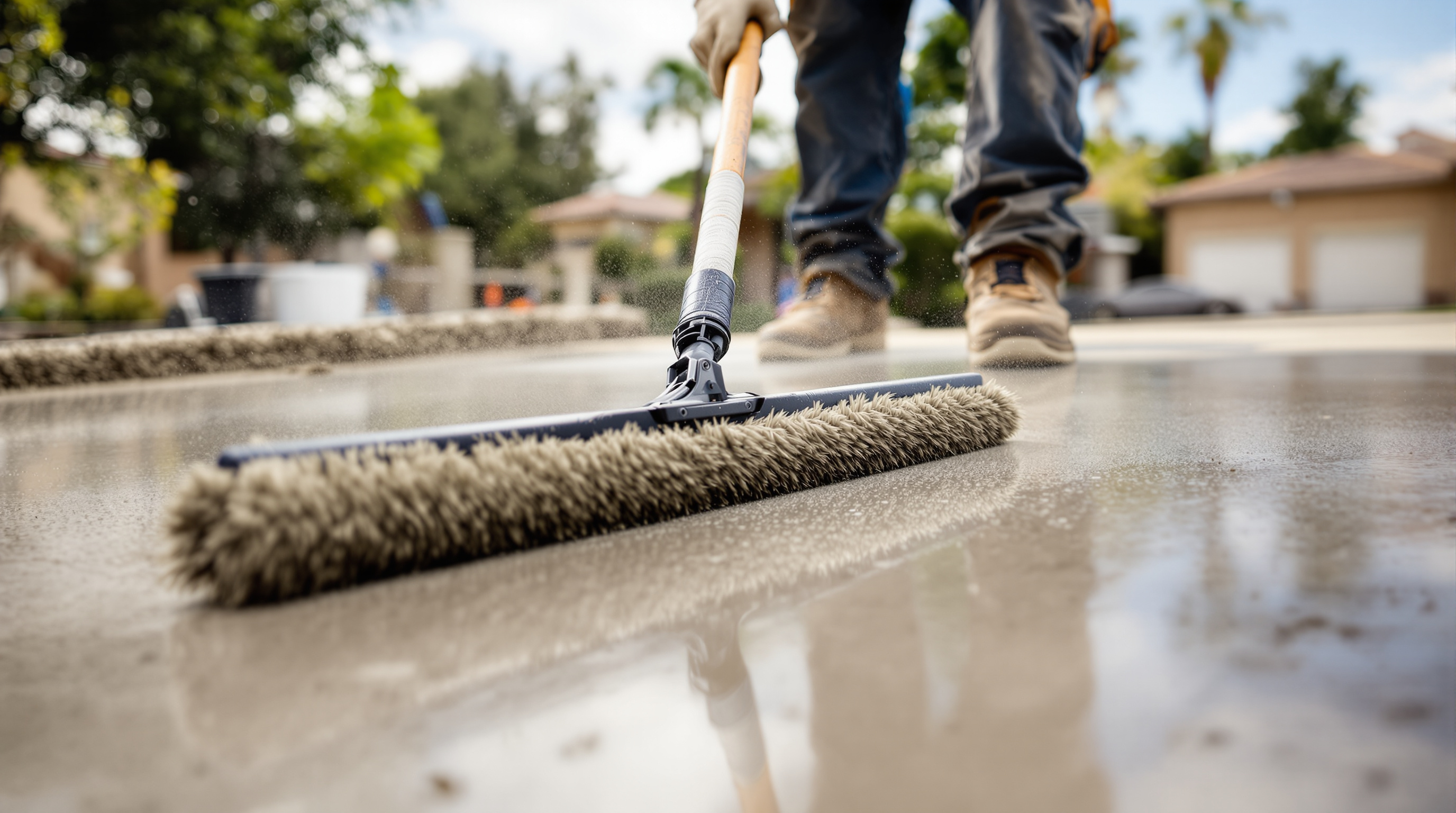
Resurfacing works best if the base concrete has no severe sinking or active structural movement. If sinking is present, mudjacking or leveling should happen first, then resurfacing applied on top.
For more details on cost and methods, see our guide to San Diego concrete resurfacing.
Preventive Maintenance to Avoid Future Repairs
The least expensive repair is the one you never need. Here’s what San Diego homeowners should do:
- Seal every 2–3 years: A penetrating sealer prevents water infiltration. Pays for itself in avoided crack repairs.
- Clean regularly: Remove debris, dirt, and organic growth. Pressure-wash annually (use low pressure, under 3000 PSI, to avoid damage).
- Manage water: Ensure gutters, downspouts, and grading direct water away from concrete. Pooling water is concrete’s worst enemy.
- Fill small cracks early: A small crack sealant repair beats a widened-crack repair two years later.
- Address sinking immediately: Sunken concrete can cause tripping hazards and allows water to pool, accelerating damage. Mudjacking or leveling when sinking first appears is much cheaper than waiting.
- Use de-icer safely (rare in San Diego): If frost occurs, avoid rock salt. Use magnesium chloride or potassium acetate, which are less damaging to concrete.
Check your concrete annually, especially after heavy rains or seasonal temperature swings. Early detection prevents small problems from becoming expensive repairs.
Concrete Repair vs. Other Surface Options
Some homeowners consider replacing concrete with pavers, stamped concrete, or other decorative surfaces. Each has trade-offs:
- Concrete paving: Durable, low-maintenance, lower upfront cost. Cracks show over time and require ongoing sealing. Repair costs can accumulate.
- Pavers (concrete, stone, or clay): Higher upfront cost, but individual units can be replaced without affecting surrounding areas. Better for high-moisture environments. Weeds can grow between joints.
- Stamped or colored concrete: More attractive than plain gray. Sealant fades and needs reapplication. Cracks still occur and are more visible on decorative finishes.
- Permeable concrete: Eco-friendly, reduces stormwater runoff. Slightly higher initial cost. Requires specialized maintenance to avoid clogging.
For most San Diego homeowners, repairing existing concrete and maintaining a proper sealer schedule is the most economical path. If you’re updating a surface anyway, our concrete vs. pavers comparison breaks down the full lifecycle costs.
Frequently Asked Questions About Concrete Repair in San Diego
Can I repair concrete cracks myself?
Is mudjacking or foam leveling better for sinking concrete?
How long do concrete repairs last in San Diego?
Do I need a permit for concrete repair in San Diego?
Get Professional Concrete Repair Today
Free estimates. Installed by our licensed & insured partner.
Related Articles
Stamped Concrete vs. Pavers in San Diego: Which Is the Better Investment for Your Home?
Trying to decide between stamped concrete and pavers for your San Diego driveway or patio? We break down cost, durability, maintenance, and long-term value so you can make the right call.
Read More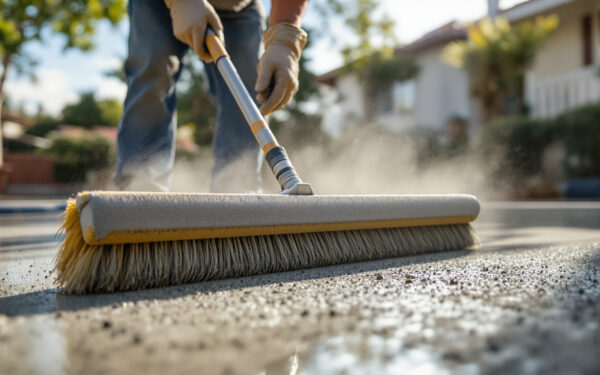
San Diego Concrete Resurfacing: Cost, Methods & When to Resurface
San Diego concrete resurfacing costs $3–$7 per square foot and can extend your surface's life by 10+ years. Learn what drives pricing, which surfaces benefit most, and how to choose between repair methods.
Read More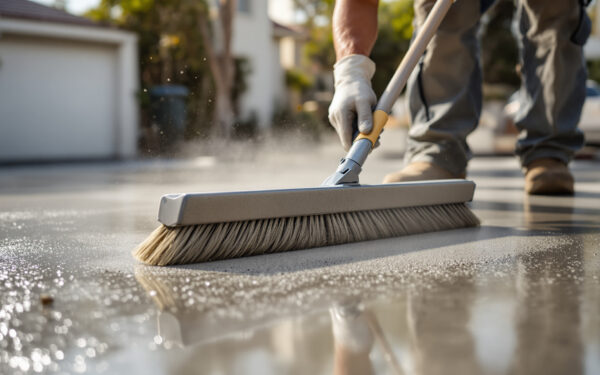
Concrete Resurfacing in San Diego: The Complete Guide
Concrete resurfacing in San Diego costs $3 to $7 per square foot and can extend your driveway's life 10+ years. Learn methods, timelines, and when resurfacing beats replacement.
Read More