We come out, measure, and give you a written price. No obligation.
Local soil prep, finish complexity, and coastal weather conditions drive the final quote. This guide walks you through options, pricing, permitting, and what to expect from a professional contractor.
- Popular finishes: Broom, stamped, stained, polished
- Lifespan: 25–40 years with proper sealing
- Permits: Required for most driveways in San Diego; check with your city
- Best time to pour: Fall or spring (avoid summer heat and winter rain)
Concrete Driveways San Diego Pricing Breakdown
Here’s what drives the variation in price:
| Component | Notes |
|---|---|
| Basic broom finish | Traction surface, minimal prep |
| Stamped concrete | Pattern + base cost; more labor intensive |
| Stained or polished | Color adds to the per-sq-ft cost |
| Site prep (excavation) | Depends on existing surface removal |
| Permit & inspection | San Diego city/county requirement |
| Sealer (optional, year 1) | Protects against salt spray and UV |
San Diego’s coastal climate and clay-heavy soils in neighborhoods like La Jolla, Pacific Beach, and Clairemont require extra sub-base prep. Many quotes increase because crews must remove expansive clay and install proper drainage to prevent cracking.
What Affects Your Final Quote
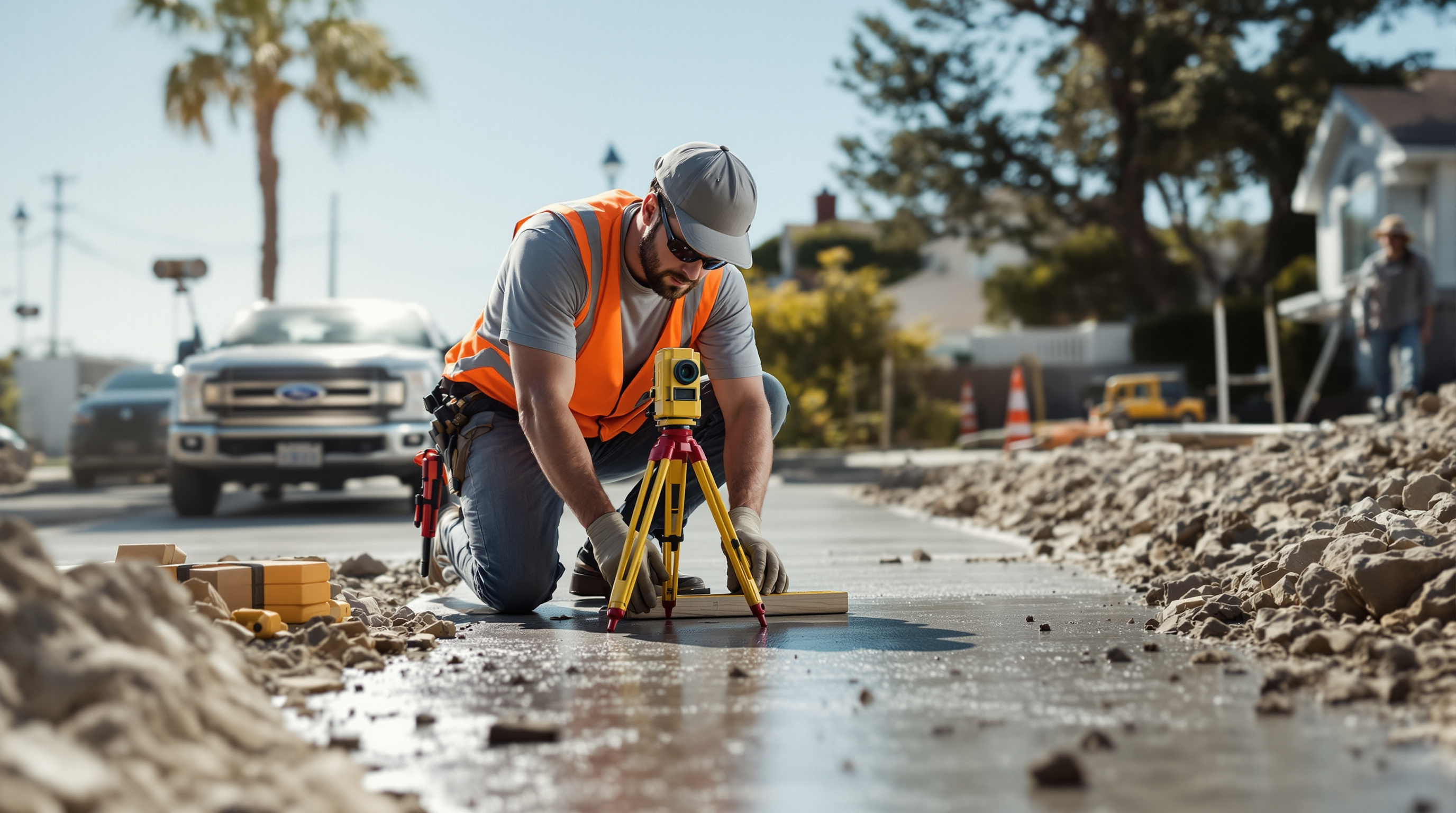
Soil condition: If your property has clay or is near the coast, contractors charge more to compact and stabilize the base. A soil test prevents costly repairs later.
Slope and drainage: San Diego’s rare heavy rains (November through February) mean proper grading is critical.
Finish complexity: Broom finish is the most basic. Stamped patterns, borders, or color require more skilled labor and longer cure time.
Concrete Driveway Styles Popular in San Diego
Broom Finish (Standard)
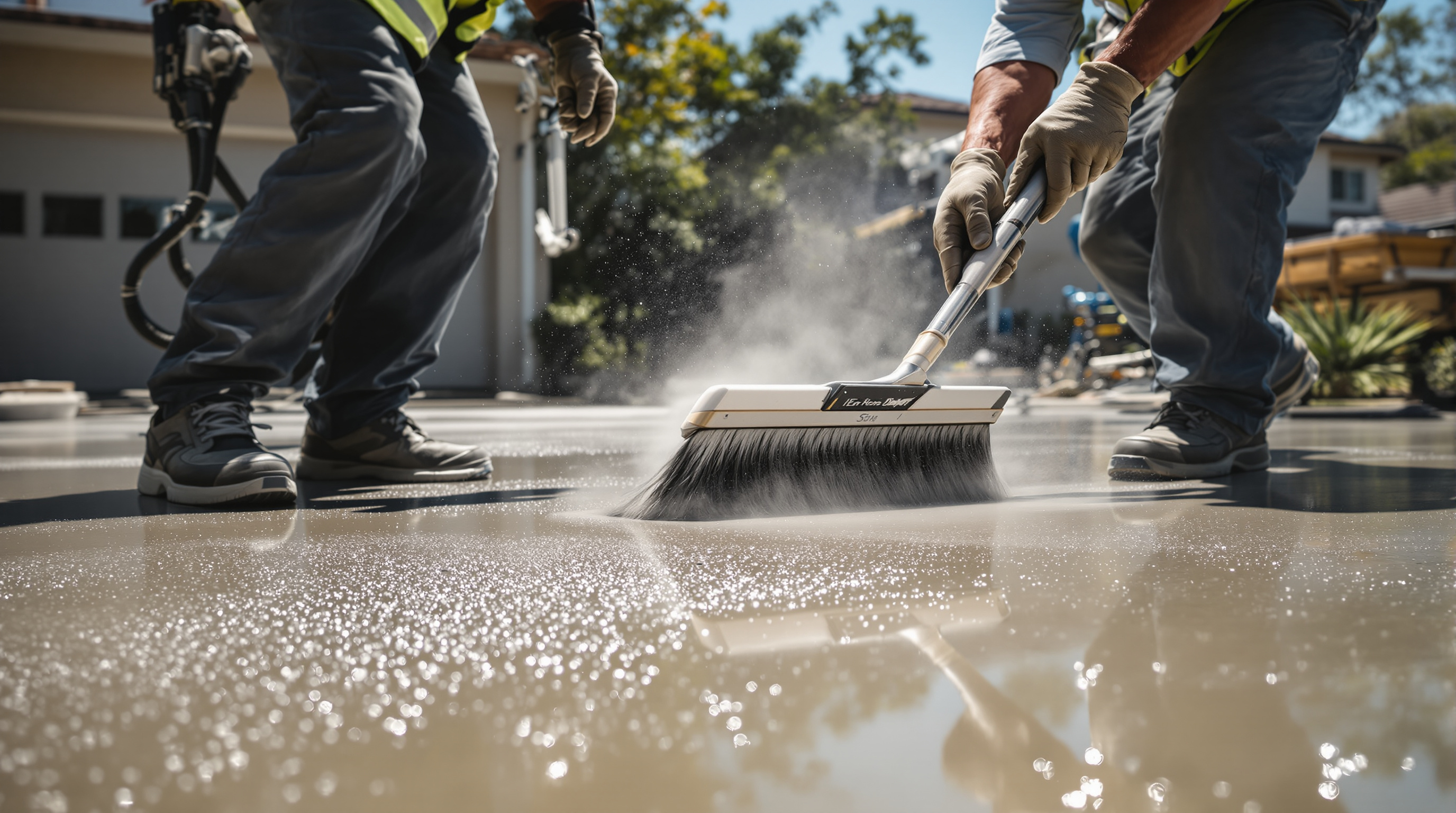
The most common choice in San Diego. A broom drag across fresh concrete creates a slip-resistant texture. Lifespan: 25–30 years if sealed every 2–3 years. Maintenance is simple: pressure wash in spring, reseal before summer heat hits.
Stamped Concrete
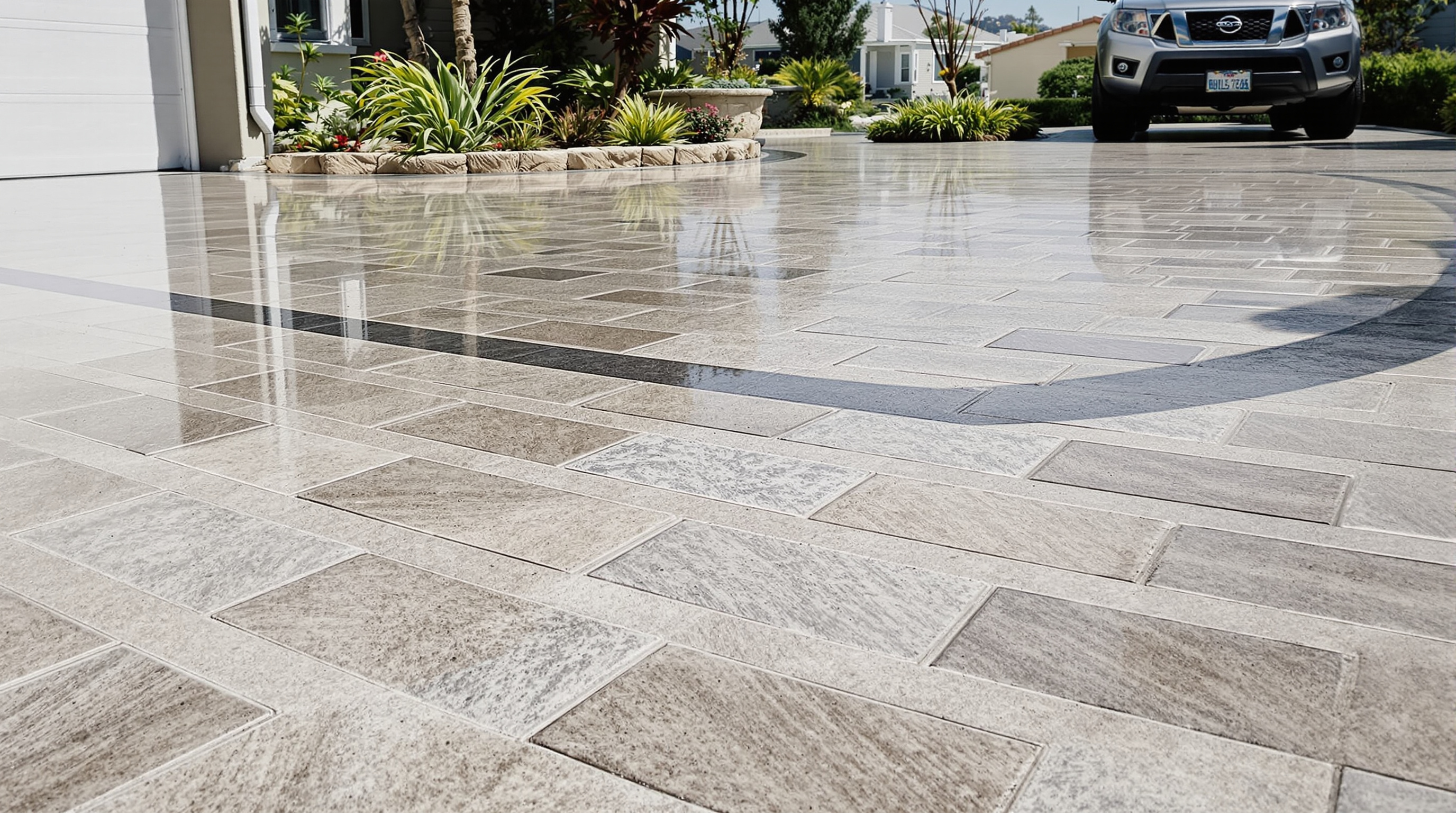
Stamped concrete San Diego homeowners choose mimics slate, brick, or stone. Popular in Rancho Santa Fe and Coronado estates. The texture hides minor cracks and stains better than plain concrete. Sealing is mandatory every 1–2 years because the textured surface traps water.
Stained Concrete
Acid stains or water-based dyes create earthy, variegated colors. In neighborhoods like Mission Hills and Normal Heights, stained driveways are increasingly popular. Stain fades over 5–10 years without sealer.
Polished Concrete
Grinding and polishing reveal the stone aggregate, creating a sleek finish. Suited to modern homes in downtown San Diego lofts or La Jolla contemporary builds. Requires a sealer and does NOT provide traction in wet conditions, not ideal for steep driveways or coastal fog zones.
Decorative Concrete with Borders
Adding a colored or stamped border around a plain center slab blends cost and style. SD Concrete Pros frequently combines a broom-finish main area with a stamped edge for clients in Hillcrest and University Heights who want curb appeal without the maintenance burden of full stamping.
Get Your Driveway Quote Today
Free estimate for concrete driveways, stamped options, and repairs
Durability and Lifespan in San Diego’s Climate
A well-poured concrete driveway in San Diego lasts 25–40 years. The coastal climate poses unique challenges: salt spray corrodes rebar, UV fades color, and rare but intense rain can cause cracking if drainage is poor.
Salt Spray and Corrosion Prevention
In Pacific Beach, Mission Beach, and Ocean Beach, salt spray accelerates concrete deterioration. Most contractors now use air-entrained concrete (tiny air bubbles) and corrosion inhibitors to extend life. Sealing every 1–2 years is essential. Unsealed concrete in coastal zones may fail in 15–20 years.
UV and Color Stability
San Diego’s 260+ days of sun per year fade stains and sealers. Polished concrete loses its sheen. Stamped patterns become less defined. Resealing every 2 years and reapplying color every 5–7 years keeps appearance fresh.
Crack Prevention
Control joints (grooves cut at regular intervals) direct cracking and prevent random splits. Professional installers space these 4–6 feet apart. Wire mesh or fiber additives add reinforcement. In clay-rich areas (Chula Vista, El Cajon), rebar reinforcement is often specified to handle soil movement.
Permitting and Building Codes in San Diego County
Most concrete driveways require a permit from the city or county. Requirements vary:
San Diego City
Driveways over 300 sq ft or any work affecting grading or drainage need a permit. Inspection after base prep and before concrete pour.
Chula Vista
Stricter grading and drainage rules. Soils report mandatory for projects over 500 sq ft.
Carlsbad & Encinitas
Coastal commission review required if driveway is within 300 feet of bluff or beach. Adds 2–4 weeks.
El Cajon & Ramona
Inland areas with less stringent coastal rules. Drainage assessment still required.
Maintenance and Sealing Schedule
A sealed concrete driveway in San Diego needs routine care to stay intact.
Sealing Frequency
Seal new concrete 1 month after pouring. Reapply sealer every 1–2 years in coastal areas (salt spray), or every 2–3 years inland.
Seasonal Care
Spring (March–May): Pressure wash to remove winter debris and algae buildup. Inspect for cracks. Seal before summer UV peaks.
Summer (June–August): Avoid installing new concrete (heat causes curing issues). Watch for shrinkage cracks in dry months.
Fall (September–November): This is ideal installation season. Temperatures are mild, humidity moderate, and rain rare until late November.
Winter (December–February): San Diego rarely sees freezing, but heavy rains increase water damage risk. Ensure slope and drainage are working. Avoid pouring concrete when rain is forecast within 48 hours.
Repair and Resurfacing
Small cracks (hairline to 1/8 inch) can be sealed with polyurethane sealant. Wider cracks or spalling (surface chipping) may need a concrete patch or full resurfacing. Concrete resurfacing in San Diego is much cheaper than full removal and replacement.
Choosing a Contractor and Warranty Terms
Not all concrete contractors are equal. Check these credentials:
Licensing and Insurance
Your contractor must hold a current California CSLB (Contractors State License Board) license. Ask for proof of license and verify it on the CSLB website. Confirm they carry liability insurance and workers’ compensation.
Experience and References
Ask for at least three recent driveways they’ve completed in your neighborhood or similar climate. Visit one if possible. How many years have they been in business? Established contractors (10+ years) are less likely to disappear mid-project.
Written Estimate and Warranty
A detailed quote includes:
- Square footage and cost per sq ft
- Finish type and color (if applicable)
- Site prep and excavation costs
- Permit and inspection fees
- Warranty terms, if any
- Payment schedule (deposit, progress, final)
Red flags: Vague pricing (“call for quote”), no warranty, payment upfront in full, or pressure to start immediately.
San Diego-Specific Considerations
The region’s unique geography and weather affect concrete work:
Expansive Clay Soils
Much of inland San Diego (Chula Vista, El Cajon, Spring Valley) sits on expansive clay that swells when wet and shrinks when dry. This causes cracking and heaving. Proper sub-base preparation (6–8 inches of compacted base rock) is non-negotiable. Some areas require a geotechnical report before approval.
Coastal Salt Spray
Ocean-adjacent properties (La Jolla, Pacific Beach, Mission Beach, Ocean Beach) face aggressive salt corrosion. Use air-entrained, low-permeability concrete mixes. Apply a high-quality acrylic or polyurethane sealer annually. Some contractors recommend epoxy coatings in coastal zones.
Limited Rainy Season
San Diego averages 10 inches of rain per year, mostly October through March. Concrete pouring windows are narrow. Most professional jobs happen May through September. If you need winter pouring, select a contractor experienced with short-cure-time mixes.
Earthquake Zones
San Diego is near the Rose Canyon and Elsinore fault zones. Concrete driveways themselves don’t require earthquake bracing, but approach drives should be reinforced if your home sits on a known fault line. Ask your contractor about seismic reinforcement options.
DIY vs. Professional Installation
Pouring concrete is not a DIY job for most homeowners. Here’s why professional installation matters:
Grading and Drainage
A small slope error (off by 0.5%) creates pooling and cracks within 2 years. Professionals use laser levels and grade to exact specifications.
Base Preparation
Compaction requires vibratory equipment. Hand tamping misses soft spots that later shift and crack the slab. Proper sub-base installation is a key factor in driveway longevity.
Mix Design
Concrete strength (measured in PSI) must match climate and load. San Diego coastal jobs require air-entrained, low-permeability mixes. Inland projects with expansive soils need fiber reinforcement or rebar. Contractors have access to testing labs and mix designs that DIY suppliers cannot match.
Finishing and Cure Time
Professional finishers create uniform texture and slope. They manage cure time in San Diego’s variable humidity and heat. Mistakes are costly, a poorly finished slab is slippery in rain or dull and chalky within a year.
Cost Comparison: Concrete vs. Alternatives
Homeowners sometimes weigh concrete against pavers, asphalt, or other surfaces. Here’s how they stack up in San Diego:
| Material | Lifespan (San Diego) | Maintenance | Best For |
|---|---|---|---|
| Concrete (plain) | 25–30 yrs | Seal every 2–3 yrs | Budget-conscious, durability |
| Stamped concrete | 25–35 yrs | Seal every 1–2 yrs | Aesthetic appeal, long-term value |
| Pavers (permeable) | 20–25 yrs | Reset joints, weed removal | Eco-friendly, modern look |
| Asphalt | 10–15 yrs (coastal) | Seal yearly, patch often | Short-term budget option |
| Recycled asphalt | 3–5 yrs | Grade and level annually | Temporary, gravel roads |
In coastal San Diego, asphalt deteriorates rapidly due to salt and UV. Concrete typically outlasts asphalt. Stamped concrete in moderate climates (inland, below-1000-ft elevation) offers good value.
Getting Your Free Estimate
Ready to start your concrete driveway project? Contact SD Concrete Pros for a free, no-obligation quote. We assess your soil, slope, and style preferences, then provide a detailed breakdown of materials, labor, and permitting.
Bring photos of your current driveway and measurements of the area. Mention your preferred finish (broom, stamped, stained). If you’re in a coastal zone or have expansive soil concerns, let us know, we’ll recommend appropriate mixes and sealing strategies.
Ready to Get Started?
Call us today for a free estimate on your concrete driveway