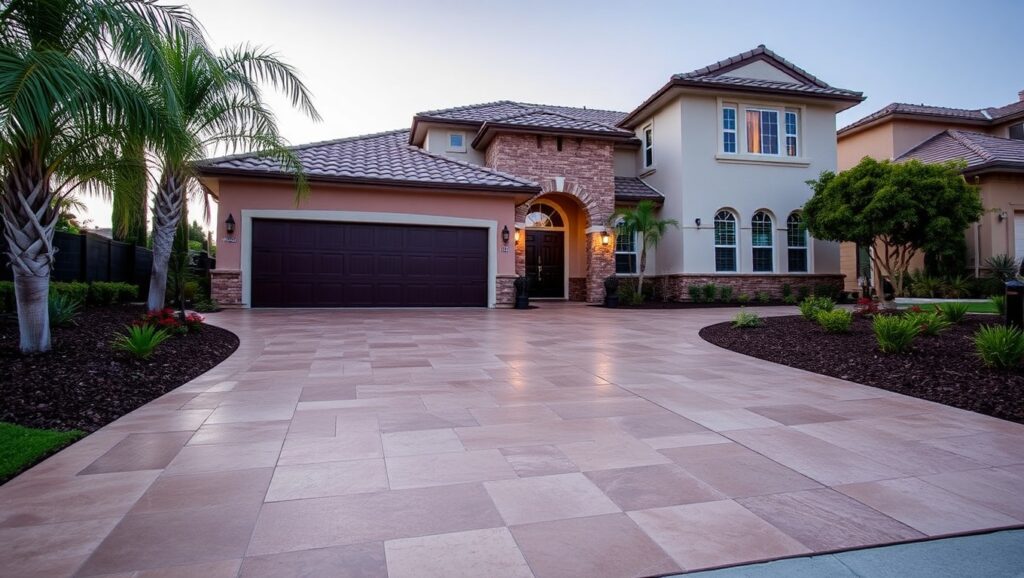
A concrete driveway San Diego homeowners choose increasingly is stamped concrete, offering beauty, durability, and lasting value unlike traditional asphalt or plain concrete. Stamped options resist summer heat cracking while providing aesthetic appeal that enhances property value for decades. From coastal Pacific Beach to inland Clairemont, homeowners are replacing old driveways with this modern solution.
If you’re thinking about replacing your driveway, you’ve probably noticed the stunning stamped concrete installations popping up around San Diego. There’s a good reason for that trend. This article breaks down exactly why smart homeowners are making this investment and what benefits you’ll actually see in your home. For more information, check out our San Diego Aluminum service.
1. Stamped Concrete Dramatically Outlasts Asphalt in San Diego’s Climate
San Diego’s weather is gentle compared to other parts of the country, but it’s still tough on asphalt. Our year-round sun, occasional rain, and temperature shifts cause asphalt to crack, fade, and break down much faster than most people expect.
A typical asphalt driveway in San Diego lasts about 15 to 20 years before needing replacement. You’ll spend money on repairs almost every year: seal coating, patching, and filling cracks. Stamped concrete, on the other hand, can last 25 to 30 years or longer with basic maintenance.
The difference comes down to materials. Asphalt is flexible but soft, so it softens more in San Diego’s heat and cracks from temperature changes. Concrete is harder and more stable. When properly sealed, stamped concrete resists the UV rays that fade asphalt in weeks.
Stamped concrete costs more upfront than asphalt but rarely needs anything beyond occasional resealing every 2 to 3 years, while asphalt needs repeated maintenance.
2. The Curb Appeal and Home Value Boost Are Real
Stamped concrete transforms how your home looks from the street. Instead of a gray slab or cracked asphalt, you have a custom surface that mimics stone, brick, slate, or tile patterns. Homes in neighborhoods like Coronado and Rancho Bernardo with stamped concrete driveways simply look more finished and expensive.
Real estate agents in San Diego confirm that stamped concrete adds genuine appeal to listings. Buyers notice it immediately when they pull up. The visual impact is similar to adding a fresh coat of paint to your entire front exterior.
The investment payback is measurable. A stamped concrete driveway can add perceived home value, and in San Diego’s competitive real estate market, curb appeal can be the difference between quick sales and lengthy listings.
You also get to choose the look. Stamped concrete can replicate the appearance of expensive materials like natural stone or herringbone brick without the maintenance hassles or the cost. Popular patterns in San Diego include ashlar slate, cobblestone, and random stone.
3. Low Maintenance Means More Time and Money in Your Pocket
Asphalt driveways demand constant attention. Every summer in San Diego, homeowners are calling seal coating contractors or noticing new cracks that need filling. It’s an endless cycle of maintenance that eats time and money.
Stamped concrete needs far less hands-on work. After installation, the main requirement is resealing every 2 to 3 years with a quality concrete sealer. That’s it. No patching, no yearly seal coating battles, no crack repair emergencies.
The maintenance routine is simple:
- Sweep regularly to prevent dirt and debris buildup
- Wash with a garden hose a few times a year
- Reseal every 2 to 3 years with a professional-grade sealer
- Address any oil spills quickly with a degreaser
Compared to asphalt, you’ll save time on maintenance and money over the life of your driveway. In neighborhoods like Mission Hills, where summer heat is intense, that reduced maintenance is a genuine quality-of-life improvement.
Ready to Replace Your Driveway?
Get a professional assessment from San Diego’s concrete experts
4. Stamped Concrete Handles San Diego’s Wet Winter Better
While San Diego doesn’t get harsh winters, our rainy season (November through March) tests driveway durability. Asphalt absorbs water, which seeps beneath the surface and causes potholes and cracking when temperatures drop, even slightly.
Properly sealed stamped concrete repels water instead of absorbing it. The sealer creates a protective barrier on the surface, so rain runs off rather than soaking in. This is especially important in areas with older homes in neighborhoods like North Park and South Park, where drainage issues are common.
Concrete also stands up better to the salt air near the coast. If you live in Ocean Beach, Pacific Beach, or any coastal San Diego neighborhood, you’ve noticed how salt spray corrodes metal and fades paint quickly. Stamped concrete resists salt corrosion far better than asphalt, which degrades rapidly in coastal environments.
The result is a driveway that stays intact through multiple wet seasons without developing the potholes and surface deterioration asphalt owners deal with regularly.
5. Customization Lets You Match Your Home’s Style Perfectly
One of the biggest advantages stamped concrete offers is the ability to customize the look completely. You’re not limited to black asphalt or gray concrete. You can create a surface that matches your home’s architecture and your personal style.
San Diego homeowners have nearly unlimited options:
- Colors: Earth tones, grays, reds, even custom colors mixed to match specific materials
- Patterns: Slate, brick, cobblestone, tile, random stone, herringbone, or geometric designs
- Finishes: Smooth, textured, or exposed aggregate for extra traction and visual interest
- Size: Large format patterns for modern homes or smaller patterns for traditional architecture
A Mediterranean-style home in La Jolla looks stunning with a stamped concrete driveway in warm earth tones and a stone pattern. A contemporary home in Bankers Hill benefits from a sleek design with darker colors and geometric patterns. Traditional homes in Hillcrest work well with classic brick or slate patterns.
The customization doesn’t stop at the driveway either. Many homeowners extend stamped concrete to patios, walkways, and pool decks for a cohesive look across the entire property.
What to Expect During Your Stamped Concrete Installation
Understanding the process helps you plan for the project. Stamped concrete installation typically takes 3 to 5 days total, though you won’t be able to use the driveway for about 7 days while it fully cures.
The Installation Process
The work begins with site preparation. Any old asphalt or concrete is removed. The soil is properly graded to ensure good drainage and prevent water from pooling under your driveway.
Next comes the base layer. A 4-inch gravel base is compacted to provide stability. This is critical in San Diego, where some areas have expansive soil that shifts with moisture changes. A poor base leads to cracking later.
The concrete is then poured and smoothed. Once it reaches the right stage (still wet but firm), contractors apply the stamp pattern using special molds. The timing is crucial—too early and the concrete is too soft, too late and it’s too hard to stamp cleanly.
After stamping, the surface is cleaned and a sealer is applied. This sealer protects the concrete and enhances the color and pattern details.
Timeline and Cost Expectations
A typical 2-car driveway in San Diego runs about 500 to 600 square feet. Costs for stamped concrete driveway installation depend on pattern complexity and color choices.
Simpler patterns cost less. Complex multi-color designs or specialized finishes cost more. The good news: even high-end stamped concrete costs significantly less than natural stone or brick driveways.
The 7-day cure time is non-negotiable. Walking on the surface before it’s fully cured can damage the finish. Your contractor will provide specific care instructions during this period.
Common Concerns Homeowners Have About Stamped Concrete
Not every homeowner jumps at stamped concrete immediately. Common concerns are worth addressing.
Does Stamped Concrete Crack?
Concrete can crack under certain conditions. However, proper installation with the right base, good sealing, and maintenance minimizes this risk significantly. Most cracks in San Diego occur due to poor base preparation or extreme temperature changes, which are rare here.
If minor cracks do appear, they’re easy and affordable to repair with concrete crack filler, unlike asphalt cracks that expand rapidly.
Is Stamped Concrete Slippery When Wet?
This is a legitimate concern. Smooth stamped concrete can be slippery in rain. The solution is simple: use a sealer with anti-slip additives. San Diego contractors routinely apply these products, which provide grip without looking obvious or changing the appearance of the pattern.
You can also add a textured finish during installation if slip resistance is a priority. This works especially well near stairs or in areas where cars are less likely to be parked.
What If I Don’t Like the Pattern After It’s Done?
This is why the design phase matters. Work closely with your contractor to see samples, photos of completed work, and mockups. Reputable San Diego concrete contractors will spend time on consultation before any work begins.
Once installed, the pattern is permanent, so choosing wisely upfront saves headaches and money later.
Why Choose Professional Installation Over DIY
Stamped concrete looks impressive, but the installation requires skill and experience. The timing of the stamping process, proper base preparation, and sealing application all affect the final quality and longevity.
Professional installers in San Diego have the right tools, materials, and knowledge to ensure your driveway lasts decades. They understand local soil conditions, drainage requirements, and weather patterns that affect concrete performance.
A poorly installed driveway can cost thousands to fix later. Hiring licensed, experienced contractors the first time protects your investment. Learn more about professional concrete driveway installation to understand what quality looks like.
Stamped Concrete in San Diego’s Diverse Neighborhoods
Different San Diego neighborhoods have different driveway styles. Stamped concrete adapts beautifully to each area’s character.
In coastal neighborhoods like Point Loma and Ocean Beach, earthy stone patterns in light grays and tans complement the beach house aesthetic. In East County areas like El Cajon, homeowners often choose warmer, rustic patterns that fit with contemporary and ranch-style architecture.
Downtown neighborhoods like Little Italy and East Village tend toward modern, sleek designs with geometric patterns and darker colors. Upscale areas like Rancho Santa Fe and Del Mar use more elaborate stone patterns that enhance luxury home aesthetics.
The flexibility of stamped concrete means it works for every San Diego neighborhood and home style. Your driveway can be as unique as your home.
Frequently Asked Questions About Stamped Concrete Driveways
How long does stamped concrete last in San Diego?
With proper installation and maintenance, stamped concrete driveways typically last 25 to 30 years in San Diego’s climate. Asphalt usually needs replacement after 15 to 20 years. The longer lifespan, combined with lower maintenance costs, makes stamped concrete more economical over time.
Can you repair stamped concrete if it cracks?
Yes, concrete cracks can be repaired with concrete crack fillers or sealers. For larger cracks, contractors can grind out the damaged area and patch it with matching concrete. Preventing cracks through proper base preparation and sealing is more cost-effective than repairing them later.
What is the best sealer for stamped concrete in San Diego?
Acrylic sealers and polyurethane sealers are the most popular options in San Diego. Acrylic sealers are easier to apply and more budget-friendly but need resealing more frequently. Polyurethane sealers last longer and provide better protection but cost more upfront. Professional contractors can recommend the best option based on your driveway’s specific conditions and your budget.
Does stamped concrete fade in San Diego’s sun?
The sealer protects the color, but over time, exposure to UV rays can cause minor fading, especially with darker colors. Using a quality UV-protective sealer and resealing every 2 to 3 years minimizes fading. Many homeowners find that subtle fading adds character and looks natural, similar to how weathered stone looks better with age.
How much does stamped concrete cost compared to other driveway options?
Stamped concrete typically costs more upfront than asphalt but less than natural stone or brick, and asphalt needs frequent repairs. When you factor in maintenance costs over 25 years, stamped concrete usually offers good value, especially in San Diego’s climate where asphalt degrades faster than in cooler regions.
Ready to Transform Your Driveway?
Let’s create a custom driveway that matches your home and lasts for decades.
619-848-3880 Related: Is Stamped Concrete Worth It? Benefits, Costs & Maintenance for San Diego Homeowners Related: Why Is My Stamped Concrete Chipping? Repair & Prevention Tips
Stamped concrete driveways represent a smart investment for San Diego homeowners who want durability, beauty, and long-term savings in one package. From the coastal communities of Ocean Beach to the suburban streets of Clairemont, homeowners are choosing stamped concrete because it simply outperforms asphalt in every way that matters: longevity, appearance, maintenance requirements, and value.
Your driveway is one of the first things people see when they approach your home. Make it count. Contact SD Concrete Pros today for a free estimate and see how stamped concrete can transform your property. Related: Decorative Concrete Options for San Diego Homes & Businesses Related: What Are the Main Uses of Concrete in Residential and Commercial Applications? Related: Stamped Concrete Patio Ideas for San Diego Backyards Related: Exposed Aggregate Concrete: A San Diego Homeowner’s Guide
Related Articles
Concrete Cost Per Yard San Diego
Concrete costs $150 to $200 per cubic yard in San Diego, depending on mix design, delivery distance, and project size. Ready-mix concrete prices vary by strength grade and finishing requirements. Here's what affects your per-yard price and how to budget accurately.
Read More
Concrete Repair Services in San Diego: Cracks, Damage, and More
Concrete repair in San Diego ranges from $300 to $2,500+ depending on damage type and extent. Learn about crack repair, resurfacing, and when to call a professional.
Read More
Exposed Aggregate Concrete: A San Diego Homeowner’s Guide
Exposed aggregate concrete in San Diego costs $8–$15 per square foot installed. Learn how this durable, decorative finish works, what it costs, maintenance requirements, and whether it's right for your patio, driveway, or pool deck.
Read More