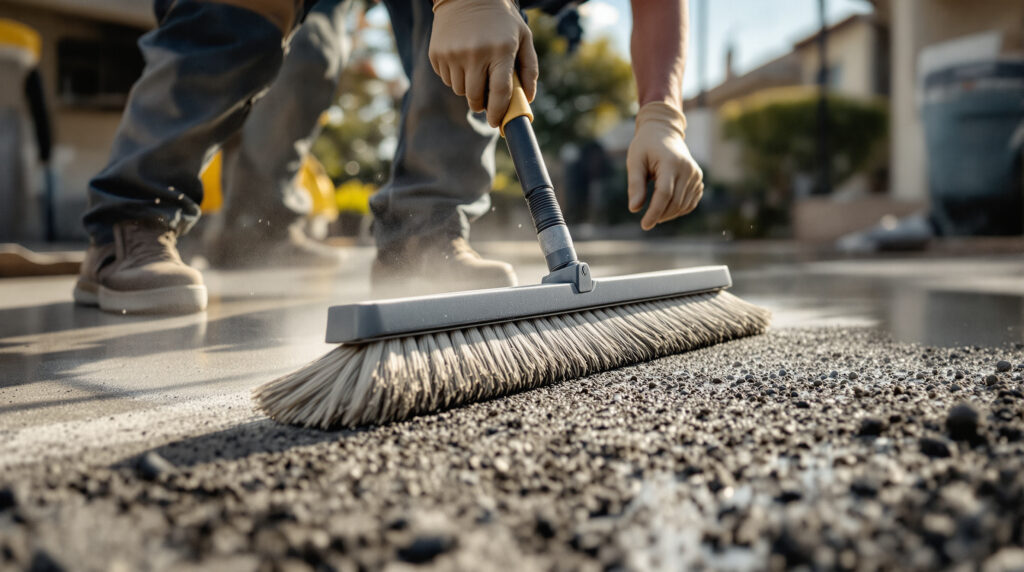
pool deck concrete San Diego — Pool deck concrete cost in San Diego depends on the finish type, base preparation, and complexity of the design. This guide walks you through contractor selection, material options, and what affects your final bill.
What Pool Deck Concrete Costs in San Diego
The price breakdown depends on several real factors:
- Square footage: Larger decks see better per-square-foot pricing due to material efficiency.
- Subbase preparation: If your yard has poor drainage or unstable soil (common in East County), contractors may charge extra for compaction and gravel base.
- Finish complexity: A simple broom finish costs less than a multi-color stamped pattern with saw-cut borders.
- Waterproofing and sealing: Quality sealant protects against San Diego’s occasional heavy winter rains.
- Demolition and removal: If you’re replacing an old deck, factor in tear-out and haul-away.
Concrete Patio vs. Pool Deck: Key Differences
A concrete patio and a pool deck serve different functions, which affects how contractors build them. Pool decks require better drainage, higher slip-resistance, and closer attention to water runoff around the pool perimeter.
Pool decks also need proper slope (typically 1/8 inch per foot) to shed water away from the pool and your home’s foundation. Patios can be flatter and more forgiving. A concrete patio in San Diego generally costs less than a pool deck, which has added engineering and slip-resistance requirements.
Both benefit from sealing, but pool decks need UV-resistant sealers to handle constant sun exposure and chlorine splash.
Ready to Get Started?
Call us today for a free estimate on your pool deck
Stamped Concrete for Pool Decks
Stamped concrete is a popular decorative choice for San Diego pool decks. It mimics the look of stone, brick, or tile while maintaining concrete’s durability and cost advantage.
Stamped Concrete Options
Common patterns include ashlar slate, flagstone, and random stone. Colors range from warm terra cotta and tan to cool grays and charcoal. Most San Diego homeowners choose warm earth tones that complement landscape and reduce glare reflection on summer days.
The price of stamped concrete reflects the extra labor for pattern laying, coloring agents, and the sealer needed to protect stamped finishes from UV fading.
Stamped Concrete Durability
Stamped concrete holds up well in San Diego’s climate if sealed every 2–3 years. However, freeze-thaw cycles (rare here but possible in inland areas) and heavy chlorine exposure can cause surface cracking over 10–15 years. Learn more about why stamped concrete chips and how to prevent it.
Exposed Aggregate Concrete for Pool Decks
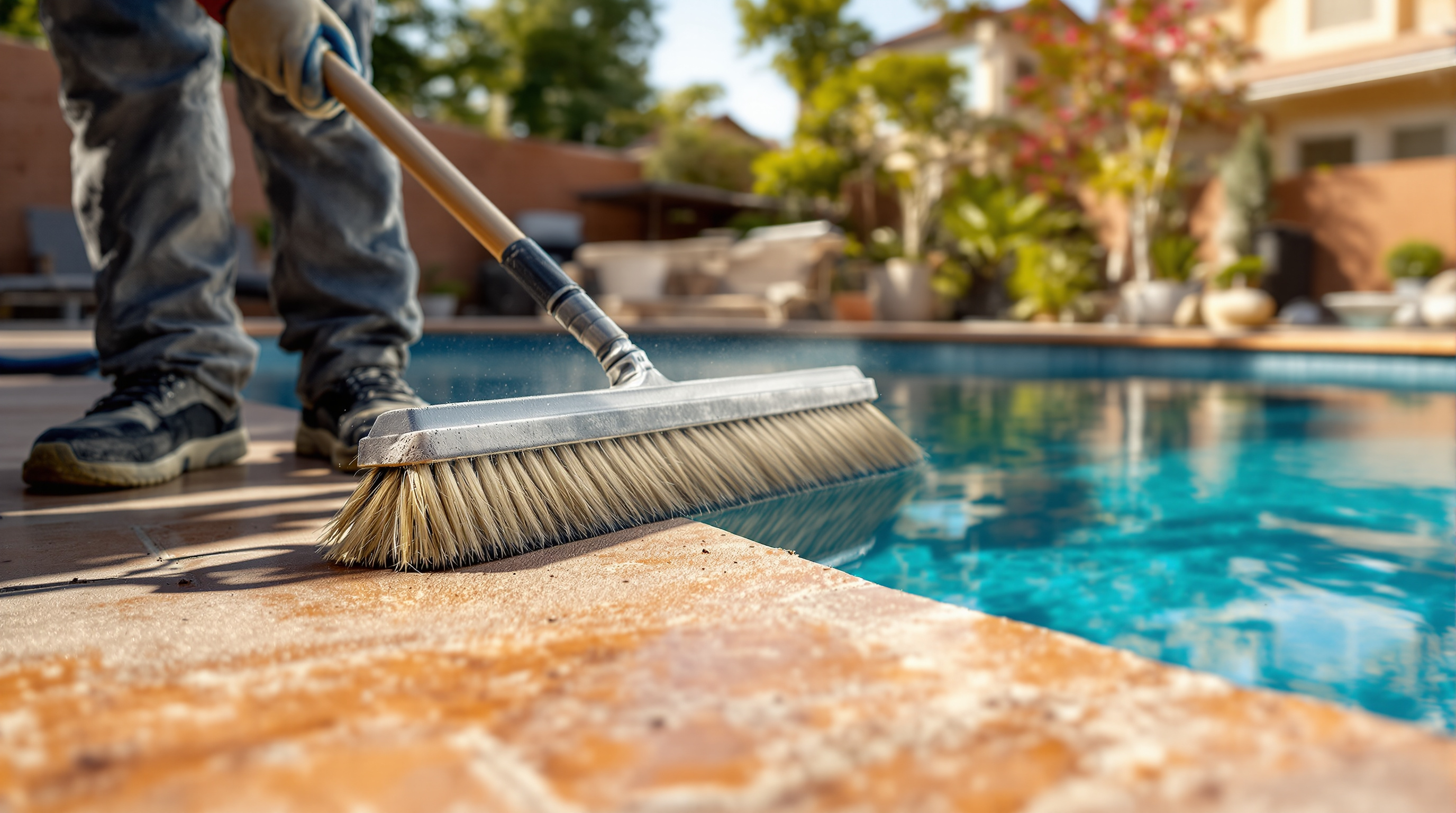
Exposed aggregate (also called pebble concrete) is another popular choice for San Diego pool decks. The finish exposes small stones embedded in the concrete surface, creating a natural, non-slip texture ideal for wet environments.
The finish is more slip-resistant than smooth concrete, a big safety advantage for families with kids. San Diego’s sunny climate shows off the stone colors beautifully.
This finish resists fading better than stamped concrete because the stone color runs throughout, not just on the surface. However, exposed aggregate can trap debris in its texture, requiring more frequent cleaning. Learn more about exposed aggregate concrete in San Diego.
Stained Concrete Pool Decks
Concrete stain adds color depth to plain or textured concrete without the labor intensity of stamping. Acid stains create mottled, natural-looking finishes. Water-based stains offer more consistent, uniform colors.
Stained concrete pairs well with broom-finished concrete for added traction. Many San Diego contractors use tan, gray, or rust-tone stains to match the region’s desert aesthetic.
Stain fades over time in direct sun, so a high-quality UV-protective sealer is essential. Resealing every 2–3 years keeps the color vibrant.
How to Choose a Pool Deck Concrete Contractor in San Diego
Finding the right contractor makes the difference between a deck that lasts 20 years and one that cracks or chips within 5. Here’s what to look for:
Licensing and Insurance
California concrete contractors need a CSLB (Contractors State License Board) C-8 classification. Ask for the contractor’s license number and verify it at cslb.ca.gov. Confirm they carry liability insurance and workers’ compensation if they employ crew members.
Licensing and insurance are a non-negotiable starting point for any bid you accept.
Local References and Portfolio
Ask to see photos of completed pool decks in San Diego neighborhoods. Request at least three references from homeowners with similar projects completed in the last 2–3 years. Call those references and ask about timeline, cleanup, and how the deck holds up post-installation.
A contractor who has worked in your neighborhood (Coronado, Point Loma, Mission Hills, Rancho Peñasquitos) understands local soil conditions and drainage patterns specific to that area.
Written Estimate and Contract
Never accept a verbal quote. Get a detailed written estimate that lists:
- Total square footage and cost per square foot
- Finish type (stamped, exposed aggregate, stained, brushed)
- Base preparation and any removal work
- Sealing and waterproofing included or separate
- Project timeline and start/completion dates
- Payment schedule
A professional contractor provides a contract that protects both parties and clarifies what happens if weather delays the job or unexpected soil conditions require extra work.
Permitting and Code Compliance
Most pool deck concrete in San Diego requires a grading or building permit if the deck is new or significantly modified. Contractors familiar with City of San Diego Municipal Code requirements know that pool decks need proper slope for drainage and may trigger backyard grading permits if the deck affects runoff.
Verify the contractor handles permitting or clearly states whether you’re responsible for pulling it yourself. Unpermitted work can create problems when you sell your home.
Pool Deck Concrete Repair and Maintenance
Even well-installed concrete decks need maintenance. San Diego’s intense sun and occasional heavy rain can cause surface wear, staining, and minor cracking over time.
Common Pool Deck Issues
Algae and mildew: Shaded areas of the deck trap moisture and grow dark patches. Power wash yearly and apply anti-algae sealer.
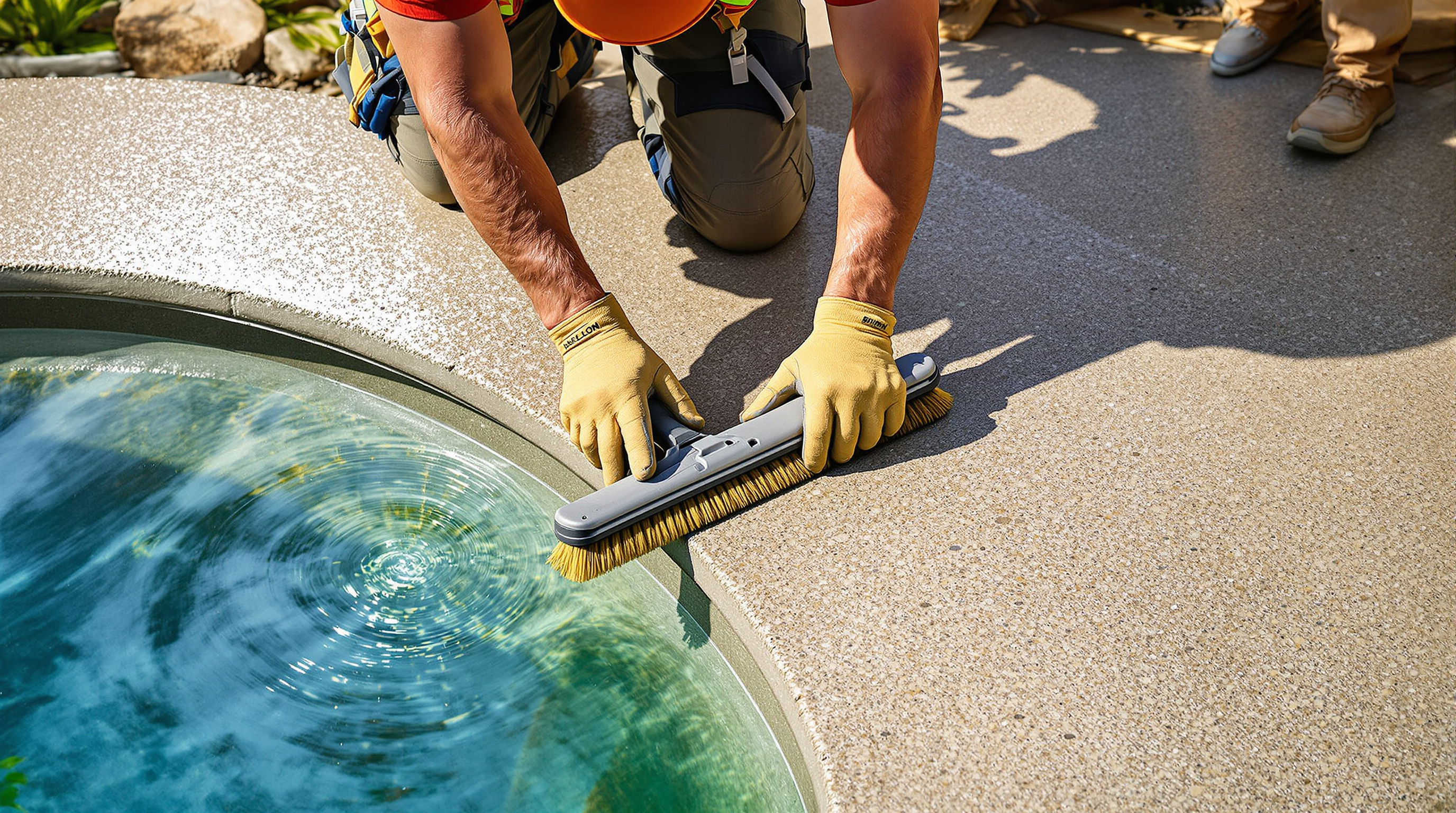
Efflorescence: White crystalline deposits appear when water migrates through concrete and salts crystallize on the surface. Common in San Diego due to our mineral-rich water. Brush off with a stiff broom or mild acid cleaner.
Spalling and cracking: Surface flaking or small cracks develop from UV exposure and water infiltration. Small hairline cracks are cosmetic; wider cracks (more than 1/4 inch) may signal deeper issues and warrant a contractor’s assessment.
Stain discoloration: Rust stains from metal furniture or organic stains from leaves need professional cleaning to avoid spreading.
Sealing and Resealing
Apply a quality sealer 30 days after the deck is poured to protect the concrete from water and UV damage. Reseal every 2–3 years in San Diego’s sunny climate. A fresh coat of sealer helps extend your deck’s life.
Concrete Driveway vs. Pool Deck: Material and Design Differences
While both use concrete, pool decks and driveways have distinct requirements. Concrete driveways in San Diego need thicker slabs (4–6 inches) to support vehicle weight. Pool decks require only 4-inch slabs because they carry foot traffic only, but they need better slip-resistance and tighter drainage control.
Driveways often use broom finish for traction. Pool decks benefit from textured or stamped finishes that are both attractive and safe when wet. Design flexibility is similar, but pool deck aesthetics matter more since they’re visible recreational spaces rather than utilitarian surfaces.
Decorative Concrete Options Beyond Stamping
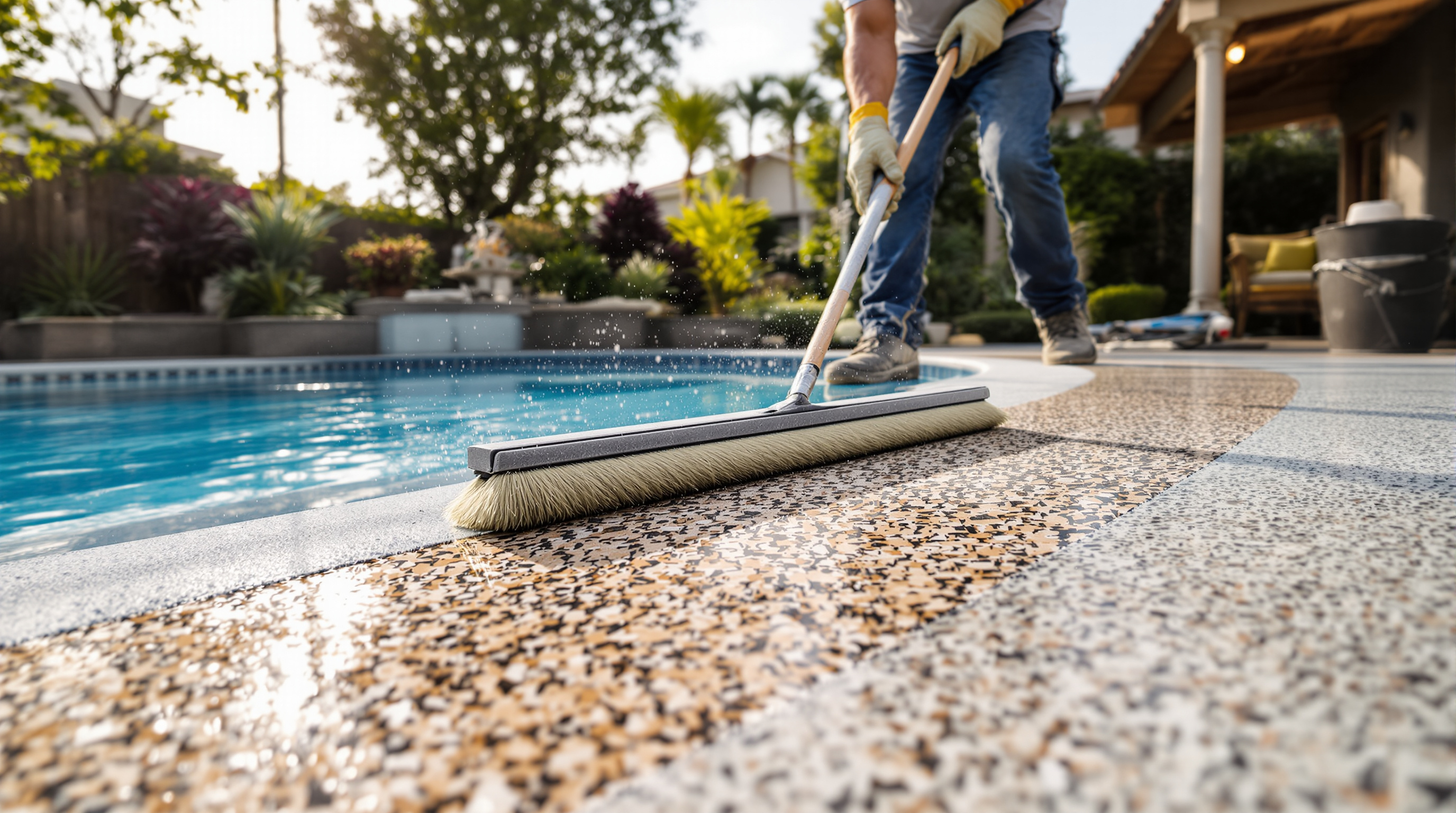
Stamped concrete dominates the market, but San Diego contractors offer other decorative solutions. Decorative concrete in San Diego includes acid staining, polished finishes, epoxy coatings, and custom scoring patterns.
Polished concrete: A smooth, glossy finish that’s elegant but slippery when wet—not ideal for pool decks unless combined with a non-slip additive.
Epoxy coatings: Durable, colorful surface layer that resists chemicals and stains. Popular in modern pool deck designs.
Custom saw-cut patterns: Geometric borders or designs cut into the concrete surface add visual interest without stamping labor.
Most San Diego homeowners stick with stamped concrete or exposed aggregate for pool decks because the cost-to-value ratio is attractive, and both finishes age gracefully in our climate.
Timeline and Weather Considerations
Concrete curing in San Diego is faster than in cooler climates due to year-round warm temperatures. Most pool decks are ready for light foot traffic 7 days after pour and full weight within 28 days.
Avoid pouring concrete during San Diego’s winter rainy season (November–February). Winter rain interferes with proper curing and can wash out color or texture. Spring (March–May) and fall (September–October) are optimal for pool deck concrete work. Summer is feasible but the heat speeds curing, requiring extra care to prevent cracking.
Plan 2–4 weeks from quote to completion, depending on permit timing and weather. If permitting is required, add another 1–3 weeks.
Ready to Build Your Dream Pool Deck?
SD Concrete Pros specializes in stamped, stained, and exposed aggregate pool decks across San Diego County
FAQ: Pool Deck Concrete in San Diego
How long does pool deck concrete last in San Diego?
A well-sealed pool deck lasts 20–30 years in San Diego’s climate. Regular sealing every 2–3 years and prompt repair of cracks extend lifespan. Unsealed concrete deteriorates faster due to sun and water exposure.
What’s the most slip-resistant pool deck finish?
Exposed aggregate concrete is the most slip-resistant because the stone texture provides grip even when wet. Broom-finish concrete is a budget-friendly alternative. Avoid polished or smooth finishes for pool decks due to safety concerns.
Do I need a permit for a pool deck in San Diego?
Most new pool decks require a grading or building permit from the City of San Diego. Resurfacing or repair of existing decks may not need a permit. Always check with your local building department or ask your contractor to verify requirements before starting.
Can I reseal my pool deck myself?
Yes, but it requires surface cleaning, proper sealer selection, and careful application. Most DIY results look acceptable. Professional resealing ensures better coverage and durability. If you’re uncomfortable with the process, hire a contractor.
What’s the difference between acid stain and water-based stain for pool decks?
Acid stain creates mottled, natural-looking colors by chemically reacting with concrete. Water-based stain produces more uniform, consistent color. Acid stain is more fade-resistant but requires careful ventilation during application. Water-based stain is easier to apply and safer for DIY. Related: Decorative Concrete Options in San Diego: Stamped, Stained & Polished Related: Pool Deck Concrete Contractors in San Diego: Local Guide Related: Complete Guide to Concrete Stamps and Stamped Finishes in San Diego
Related Articles
Concrete Contractor San Diego: Complete Guide 2026
Find a reliable concrete contractor in San Diego. Learn what to expect, how to compare bids, licensing requirements, and real project costs for driveways, patios, and more.
Read More
Concrete vs Pavers San Diego Driveway
Comparing concrete and pavers for San Diego driveways? Concrete costs $8–$15/sq ft and lasts 30+ years. Pavers run $15–$25/sq ft with easier repairs. Learn the tradeoffs in durability, maintenance, climate fit, and total cost of ownership.
Read More
Pool Deck Concrete Contractors in San Diego: Local Guide
Find expert pool deck concrete contractors in San Diego. Learn costs, materials, durability, and how to choose the right contractor for your backyard project.
Read More