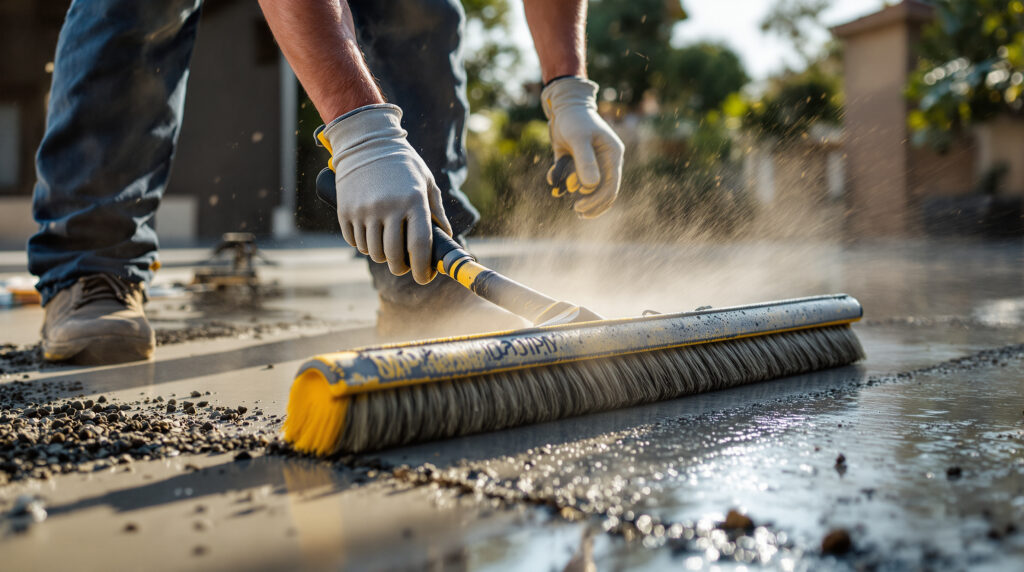
pool deck concrete contractors San Diego, Pool deck concrete contractors in San Diego handle everything from new installations to repairs and decorative finishes around residential and commercial pools. Cost depends on finish type, sub-base prep, and local labor rates. This guide walks you through what to expect, how to evaluate contractors, and which finishes work best for San Diego’s coastal climate.
- Stamped and colored finishes cost more than plain broom-finish
- Standard cure time is 7 days before light use; 28 days for full strength
- Salt spray and UV exposure require proper sealing every 2–3 years
- Verify CSLB licensing (California Contractors State License Board) before hiring
Why Pool Deck Concrete Matters in San Diego
A pool deck is the hardest-working surface in your backyard. It takes constant foot traffic, pool chemicals, sun exposure, and splash. In San Diego’s salt-air environment (especially near coastal neighborhoods like Pacific Beach, Mission Beach, and Ocean Beach), concrete must resist chlorine degradation and salt-spray corrosion.
Most pool decks fail prematurely not because the concrete is weak, but because the original contractor skipped proper drainage or sealing. A contractor who understands San Diego’s microclimate and uses the right finish can give you 20–30 years of service. A cheap install fails in 5–8 years.
SD Concrete Pros and other established local contractors know that pool deck concrete in San Diego needs:
- Proper slope (1/8 inch drop per foot) for water runoff
- A solid 4–6 inch reinforced sub-base to prevent settling
- High-quality sealer applied immediately after pour and reapplied every 2–3 years
- Air-entrained concrete mix (designed with tiny air bubbles) for freeze-thaw resistance
- Non-slip texture for safety around wet surfaces
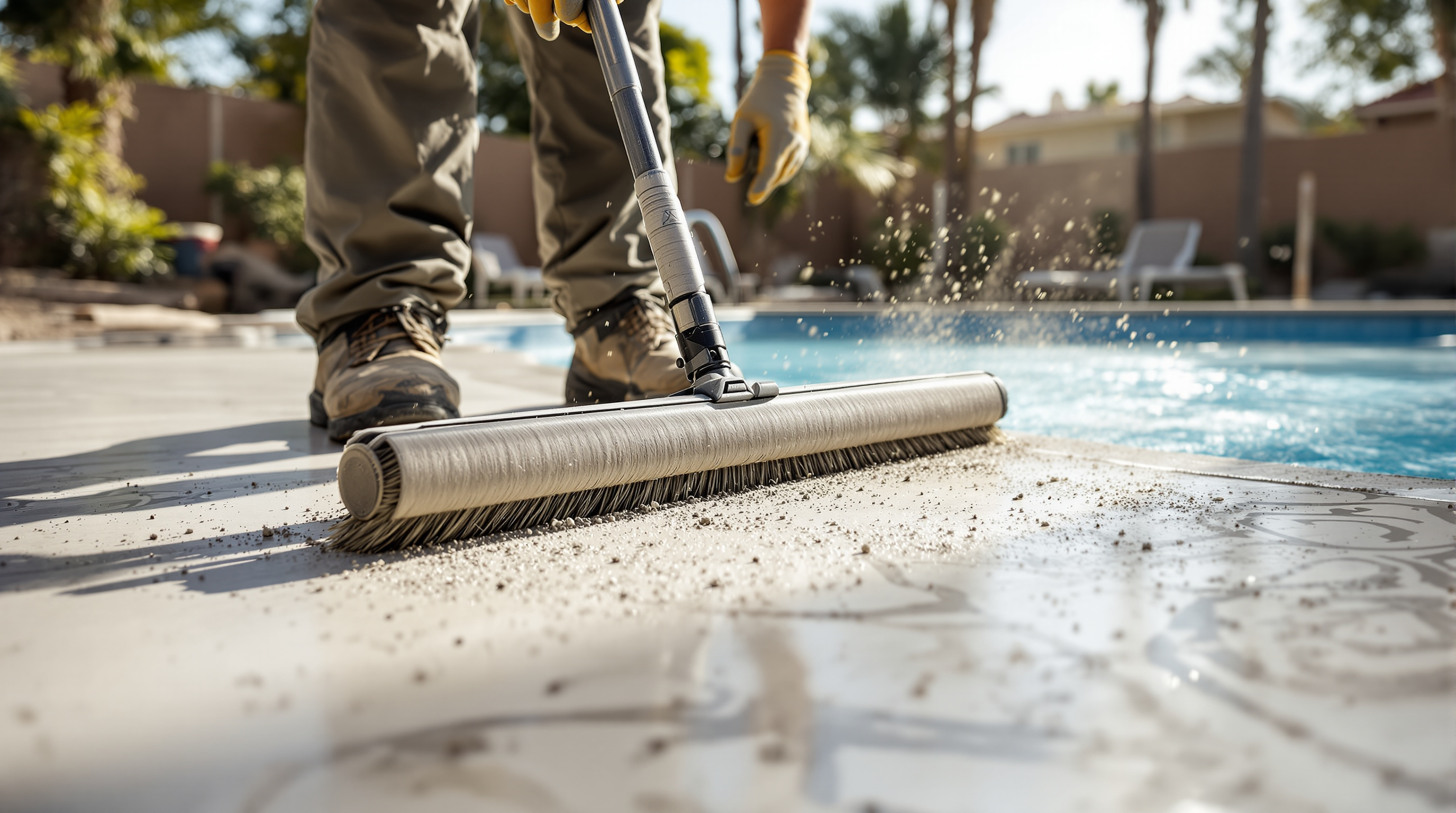
Pool Deck Concrete Costs in San Diego
Budget varies widely based on size, finish, and current site conditions.
| Finish Type | Suited To |
|---|---|
| Broom-finish (basic) | Budget pools, utility areas |
| Trowel-finish (smooth) | Modern aesthetics, easier cleaning |
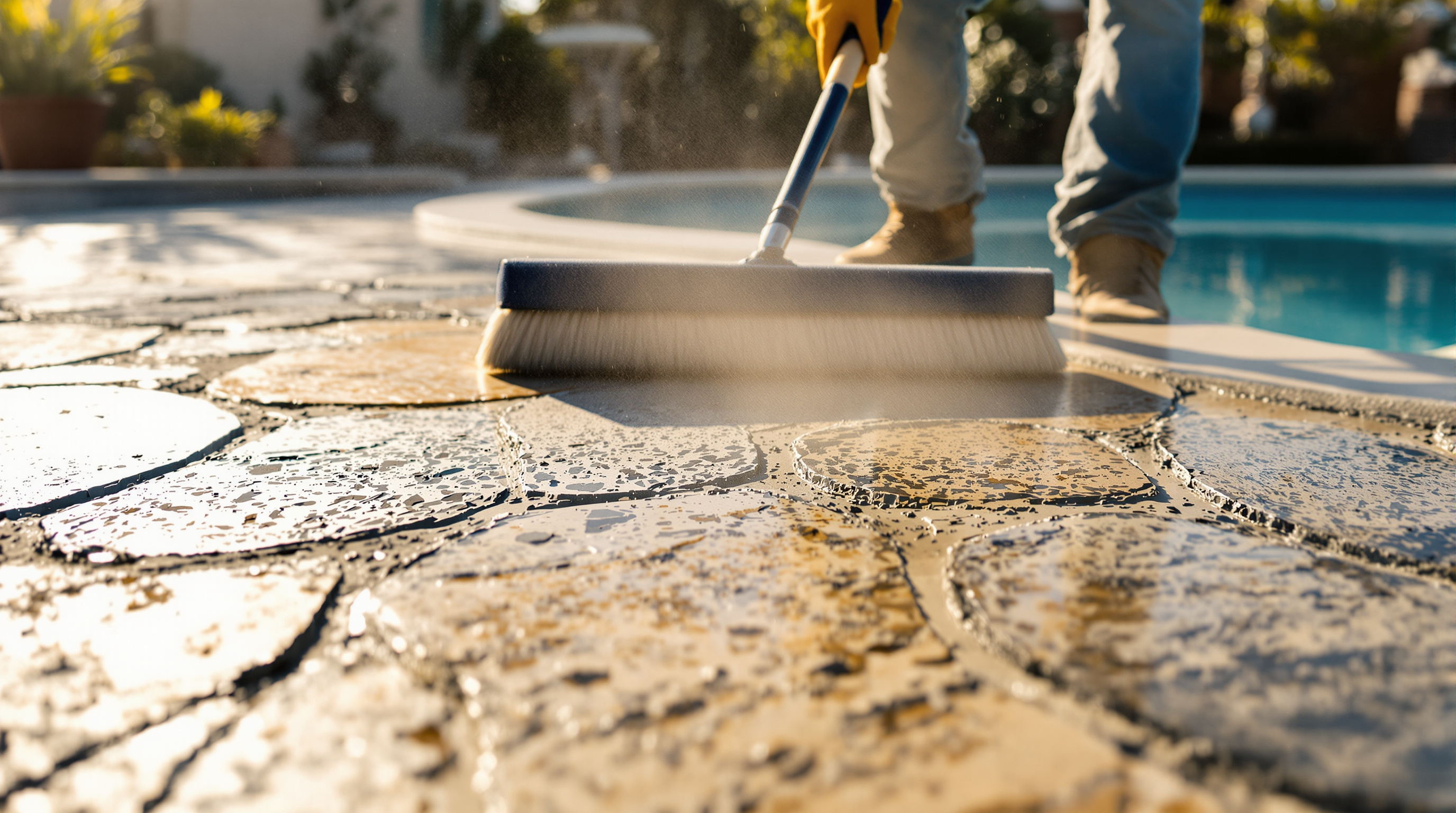
| Stamped concrete | High-end look, custom patterns |
| Colored concrete | Coordinating with home, hide stains |
| Exposed aggregate | Slip resistance, premium look |
| Concrete resurfacing (existing deck) | Refreshing worn surfaces |
Cost drivers beyond finish:
- Removal and haul: Adds cost if the old deck must come out
- Permits: San Diego requires permits for structural concrete work; fees vary
- Drainage: Installing French drains or slope adjustments adds cost
- Site access: Tight spaces or pool equipment in the way slows work and raises labor cost
- Custom shapes: Curved edges or island features cost more than rectangular pours
Stamped Concrete vs. Plain Finish for Pool Decks
Stamped concrete is a popular upgrade for San Diego pool decks. It mimics stone, brick, or wood patterns and adds to your install cost. Here’s the real trade-off:
Stamped Concrete
Pros: High-end look, hides dirt and stains well, huge pattern variety. Cons: Sealing is mandatory every 2 years (not optional); chips can expose gray concrete underneath; color fades without maintenance.
Plain Broom-Finish
Pros: Lowest cost, naturally slip-resistant, minimal maintenance. Cons: Shows algae and staining easily; looks utilitarian; no customization.
San Diego pool contractors often recommend stamped concrete for high-visibility areas (entry side, spa areas) and broom-finish for utility zones or if your budget is tight. Many homeowners do a hybrid: stamped near the house, plain around equipment.
Permitting and Code Requirements for Pool Decks in San Diego
San Diego does require permits for most concrete work, including pool decks. Here’s what applies:
When You Need a Permit
- New pool deck pours (any size)
- Removing and replacing an existing deck
- Structural repairs (base prep, drainage changes)
- Resurfacing if it adds height or changes drainage
When You Might Avoid Permitting (Rare)
- Resurfacing existing deck with thin bonded overlay (verify with city)
- Patching small cracks or single panels (under 50 sq ft)
- Note: Always check with your local jurisdiction; rules vary by district
Permit timelines in San Diego typically run 2–4 weeks. Your contractor should handle the application, though you pay the fee. Red flag: any contractor who says “we’ll skip the permit to save you money.” That’s illegal and voids your liability protection.
Pool decks must also meet slope and drainage codes. The standard is 1/8 inch of slope per foot away from the pool to prevent water pooling. If your property is already poorly graded, a professional contractor will recommend a drainage system (French drain or permeable sub-base) to prevent problems.
Durability: How Long Pool Deck Concrete Lasts in San Diego
A well-installed pool deck in San Diego lasts 20–30 years. Here’s what affects lifespan:
Accelerates wear (5–10 years): No sealing, constant chlorine splash, poor drainage, cheap concrete mix, inadequate sub-base.
Extends life (25–35 years): Proper sealing (reapplied every 2–3 years), good drainage, quality concrete (3,500+ PSI), reinforced sub-base, occasional power washing.
Salt spray in coastal San Diego neighborhoods (Pacific Beach, Mission Beach, Coronado) is particularly hard on concrete. If your home is within 2 miles of the ocean, invest in a high-quality sealer and reapply every 2 years instead of 3. The extra cost every couple years saves money in premature repairs.
Ready to Upgrade Your Pool Deck?
SD Concrete Pros designs and installs pool decks throughout San Diego. Get a free estimate today.
How to Choose a Pool Deck Contractor in San Diego
Hiring the right contractor is the single biggest factor in a successful pool deck. Here’s how to evaluate candidates:
Verify Licensing and Insurance
Always confirm your contractor holds a current CSLB (California Contractors State License Board) Class B General Contractor license or Class C-8 Concrete license. You can verify this free at the CSLB website. Request proof of workers’ compensation insurance and general liability insurance. A legitimate contractor has no problem providing these documents.
Look for Local Portfolio and Experience
Ask for photos of completed pool decks in San Diego neighborhoods you recognize: La Jolla, University City, Rancho Peñasquitos, Del Mar, Poway. A contractor who works in your microclimate understands local soil, drainage, and salt-air issues. Avoid contractors who primarily work inland and treat coastal San Diego as an afterthought.
Review Written Estimates
Every estimate should itemize:
- Square footage and finish type
- Sub-base preparation (removal, fill, compaction)
- Concrete grade (PSI strength) and mix design
- Sealing and curing protocol
- Timeline and payment schedule
Red flag: vague estimates with a single lump-sum figure and no spec. You can’t evaluate cost if you don’t know the spec.
Ask About Sealing Recommendations
A contractor who doesn’t mention sealing isn’t thinking about long-term durability. Ask which sealer they recommend (penetrating, membrane, or both), when it should be applied (immediately after cure, or later), and whether it’s included in the price. A quality sealer adds to the cost but is non-negotiable in San Diego.
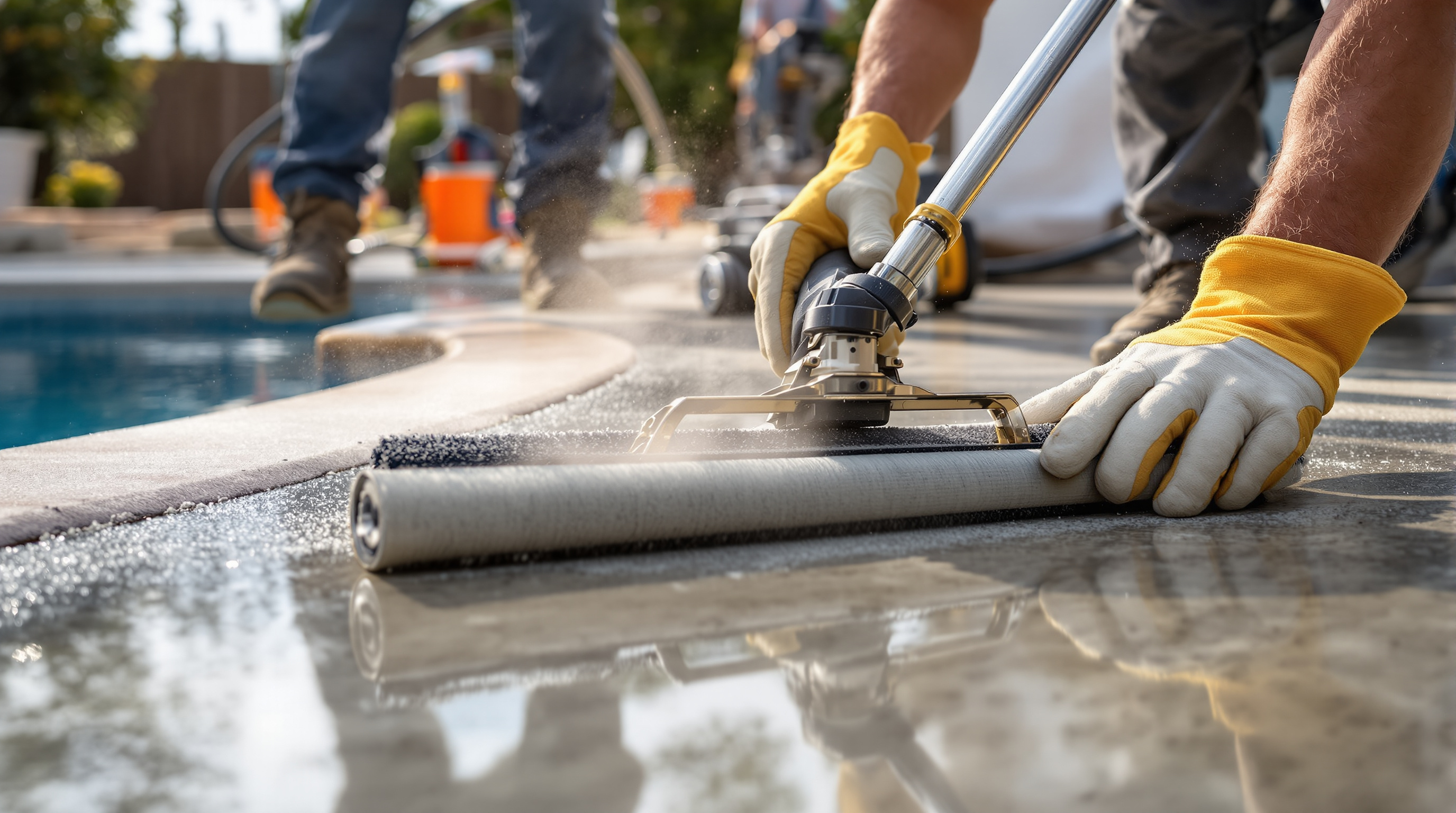
Common Pool Deck Problems and Repairs
Even well-built pool decks develop issues over time. Here’s what to watch for and when to call a contractor:
Cracking (hairline to 1/8 inch): Normal shrinkage. Seal cracks with flexible polyurethane or epoxy. If cracks are widening (1/4 inch or more), this signals settlement, call a professional.
Spalling and flaking (surface peeling): Usually salt spray or freeze-thaw damage. Resurface the affected area or grind and seal.
Settling or sinking: The sub-base has failed. This requires professional evaluation, sometimes you can inject polyurethane foam to lift and restabilize, or you’ll need concrete patio sinking repair.
Algae and staining: Power wash and reseal. Prevents larger problems.
Sealer failure (chalking, peeling): Old sealer is breaking down. Strip and reapply. This is preventive maintenance, not a major repair.
Concrete vs. Pavers for Pool Decks
Some homeowners consider permeable pavers as an alternative to concrete. Here’s how they compare for San Diego pool decks:
Concrete Pool Decks
Advantages: Lower initial cost, seamless surface, excellent durability with sealing, one solid poured plane. Disadvantages: Cracks develop over time, requires regular sealing, can be slippery when wet.
Paver Pool Decks
Advantages: No cracking, individual units can be replaced, permeable (better drainage), easier to level for pool equipment. Disadvantages: higher cost, weeds grow between pavers, individual units shift or sink, maintenance is ongoing.
For pool decks specifically, concrete is the better choice in San Diego. Pavers work fine for driveways and concrete patios, but the constant moisture around pools causes pavers to settle unevenly. Stick with concrete and invest in proper sealing.
Maintenance and Sealing Schedule for Pool Deck Concrete
Once your pool deck is installed, a simple maintenance routine extends its life dramatically. Here’s what to do:
Monthly: Rinse the deck with fresh water to remove chlorine residue and salt spray. If you live within 2 miles of the ocean, rinse weekly.
Quarterly: Power wash at 1,500–2,000 PSI. Avoid high-pressure (3,000+ PSI) as it can damage the concrete surface.
Every 2–3 years: Strip old sealer and apply fresh sealer. In coastal San Diego (Pacific Beach, Mission Beach, Ocean Beach), do this every 2 years. Inland areas can stretch to 3 years.
As needed: Fill hairline cracks with flexible sealant. Replace sections that spall or chip. Address settling immediately to prevent safety hazards.
Decorative Concrete Options for Pool Decks
Beyond stamped concrete, pool decks offer other decorative concrete options:
Stained concrete: Acid or water-based stains add color that integrates into the concrete, not just on the surface. Looks natural, hides dirt well. Great for coordinating with your home’s exterior.
Exposed aggregate: Sealer is removed from the top layer to reveal pebbles or stones. Naturally slip-resistant. Ideal for pools because it’s always grip-friendly when wet.
Polished concrete: Mechanical grinding creates a smooth, glossy finish. Looks modern, easy to clean. Less common for pool decks because it becomes very slippery when wet, not safe. Reserve for indoor or covered areas.
Scored or pattern-cut concrete: Shallow cuts create geometric designs. Low cost but also low impact. Useful for breaking up large flat decks visually.
Most San Diego pool deck contractors recommend a combination: stamped or colored concrete in high-visibility areas + exposed aggregate in wet zones for safety.
Seasonal Considerations for Pool Deck Installation in San Diego
San Diego’s mild climate means pool deck work can happen year-round. However, timing matters:
Summer (June–August): Fastest curing due to heat and low humidity. Plan for 7-day cure before light use. Contractors are busiest; book 4–6 weeks ahead.
Winter (December–February): Cooler temps slow curing to 10–14 days. Rain can interrupt work. Expect 2–3 week delays. But it’s the quiet season, contractors may offer slight discounts and faster scheduling.
Fall and Spring: Ideal windows. Moderate temps, low rain, contractors have availability. Plan for 7–10 day cure.
Avoid installing pool decks during the rainy season if possible (January–March in coastal San Diego). Moisture disrupts proper curing and can trap water in the sub-base.
Questions to Ask Your Contractor Before Hiring
Use this checklist to evaluate a concrete contractor for your pool deck project:
- How many pool decks have you installed in San Diego in the last 5 years?
- Can you provide references from homeowners in my neighborhood?
- Is your CSLB license current and in good standing? (Verify yourself.)
- Do you handle permitting, or does the homeowner apply?
- What concrete mix (PSI) do you use, and why?
- What sealer do you recommend, and when will you apply it?
- Do you handle drainage, or should I hire a separate company?
- How long before I can use the deck? (And what “use” means: walking vs. furniture vs. pools running.)
- What’s your cleanup and waste removal process?
A confident contractor answers all of these without hesitation. Vague or defensive answers are a red flag.
Get a Professional Pool Deck Quote
SD Concrete Pros delivers pool deck installations with precision in San Diego. Contact us for a free, no-obligation estimate.
Conclusion: Investing in Quality Pool Deck Concrete
Your pool deck is a long-term investment. A cheap contractor can save you money upfront and cost you more in repairs within 5–8 years. A professional contractor like SD Concrete Pros installs correctly and brings expertise to the job.
Good pool decks in San Diego are built on proper sub-base, sealed immediately, and maintained consistently. They’re also installed by contractors with CSLB licensing, local experience, and real references. Take the time to vet your contractor, and you’ll have a beautiful, safe, durable pool deck for decades.
Ready to start? Call 619-848-3880 or request a quote. SD Concrete Pros serves all of San Diego County and specializes in pool deck concrete installations with customized finishes. Related: Complete Guide to Concrete Stamps and Stamped Finishes in San Diego Related: Concrete Repair Services in San Diego: Cracks, Damage, and More Related: Hiring a Licensed Concrete Contractor in San Diego: What You Need to Know
How long does a pool deck concrete installation take?
Do I need a permit for a pool deck in San Diego?
How often should I seal my pool deck?
What’s the difference between stamped and plain concrete pool decks?
Related Articles
Concrete Contractor San Diego: Complete Guide 2026
Find a reliable concrete contractor in San Diego. Learn what to expect, how to compare bids, licensing requirements, and real project costs for driveways, patios, and more.
Read More
Concrete Driveway Repair San Diego — Complete Guide
Concrete driveway repair San Diego requires professional assessment to prevent costly damage. Cracks, potholes, and surface deterioration are common issues in San Diego’s climate. Quick…
Read More
Decorative Concrete San Diego
Decorative concrete in San Diego transforms driveways, patios, and pool decks with stamped patterns, stains, and custom designs. Learn costs, options, and durability for your project.
Read More