Concrete driveway cost San Diego varies by project. Base preparation, finish type, square footage, and local permitting drive the final price. Here’s what to expect before you request your first quote.
Concrete Driveway Pricing Breakdown in San Diego
The cost of concrete driveway installation in San Diego breaks down into two main components: materials and labor. A basic broom-finish concrete driveway costs less than decorative finishes like stamped or colored concrete.
Material Costs
A standard 4-inch residential driveway uses roughly 3.7 cubic yards of concrete per 300 square feet.
Reinforcement (rebar or wire mesh) and decorative additives like color pigments or sealer add to the cost.
Labor Costs
Labor is a major part of your total bill, covering site prep, forming, pouring, finishing, and curing. Skilled concrete finishers command premium rates, especially for stamped or exposed aggregate work.
Factors That Drive Concrete Driveway Cost in San Diego
Square Footage and Dimensions
Larger driveways cost less per square foot due to labor efficiency. Most San Diego residential driveways range from 250–400 square feet.
Subbase Preparation
San Diego’s sandy coastal soils and inland clay require proper base prep. If your driveway site has poor drainage or unstable ground, contractors must excavate 4–6 inches deeper and install a compacted gravel base. Areas near Del Mar or Rancho Santa Fe often have clay that needs aggressive prep.
If existing concrete must be removed, demolition and hauling add to the cost.
Finish Type
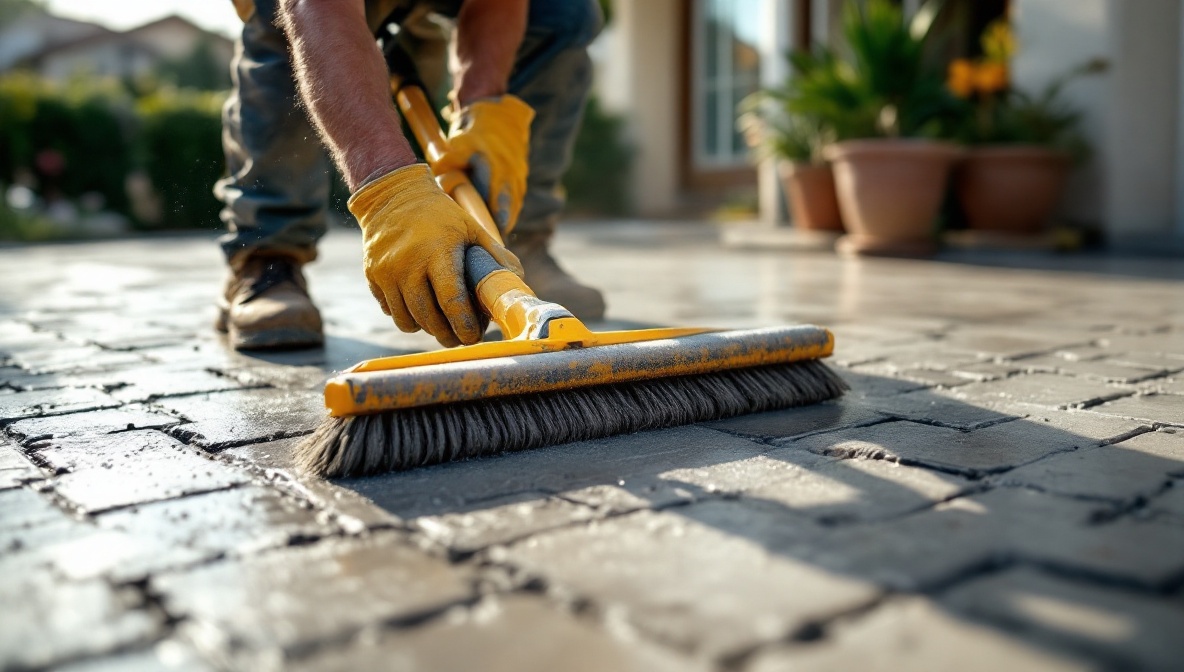
Broom-finish (standard textured surface) is durable and slip-resistant.
Trowel-finish (smooth, polished) looks sleek but is slippery when wet.
Stamped concrete mimics stone, brick, or pavers. Popular in upscale neighborhoods like La Jolla or Coronado.
Exposed aggregate (decorative stones visible) is attractive and skid-resistant.
Colored concrete: Integral color or surface stain adds aesthetic appeal.
Permits and Inspections
San Diego requires building permits for driveways larger than 200 square feet or any that cross property lines. Permit costs depend on project scope. City inspections add 1–2 weeks to your timeline but are non-negotiable.
Smaller projects (under 200 sq ft) may skip permits, but check with your local municipality. Chula Vista, Carlsbad, and Oceanside have similar requirements.
Slope and Drainage
Proper slope (typically 1–2% grade) prevents water pooling. If your lot has challenging topography, forming costs increase. Coastal areas like Encinitas that get seasonal flooding need enhanced drainage design, adding to the cost.
Climate and Seasonal Timing
San Diego’s mild winters are ideal for concrete work. Summer heat (80–90°F in inland areas) can speed curing but increase labor costs slightly. Rainy seasons (December–February) can delay projects. Pouring in spring or fall gives contractors optimal conditions and can lower costs.
Ready to Get Started?
Get an accurate estimate for your San Diego concrete driveway project today
Cost Comparison: Concrete vs. Other Driveway Materials
Concrete is one of the most cost-effective driveway options in San Diego, but homeowners often consider alternatives.
Asphalt: Cheaper upfront but requires seal coating every 2–3 years and lasts only 15–20 years. Not recommended for San Diego’s intense summer sun.
Pavers (permeable concrete blocks): Higher cost but excellent for drainage and aesthetic appeal. Popular in La Jolla and Del Mar for eco-conscious builds. See our concrete vs. pavers comparison for details.
Recycled asphalt: Budget option; poor longevity and high maintenance.
Concrete is strong on durability (30+ years) and maintenance costs when properly sealed.
Hidden Costs and Unexpected Expenses
Utility Marking and Excavation
San Diego’s Call Before You Dig (811) requirement is legally mandatory. If unmarked utilities (gas, electric, water) are struck, liability falls on the homeowner. Call 811 free at least 48 hours before excavation begins.
Poor Soil Conditions
Inland areas with clay or expansive soil may require soil stabilization. A geotechnical report (optional but recommended for premium projects) adds cost.
Removal of Existing Pavement
Demolishing and recycling old concrete or asphalt adds to the project cost. In older neighborhoods like North Park or South Park, plan for this.
Extended Curing Time in Cold Weather
Winter pours (November–February) take 7–14 days to cure fully. Summer pours cure in 3–5 days. Extended curing ties up contractor crews, sometimes adding to your bill.
Money-Saving Strategies for Your San Diego Driveway Project
Choose Broom-Finish Over Decorative Options
Broom-finish costs less than stamped concrete. It’s durable, low-maintenance, and remains the most common finish in San Diego residential areas.
Schedule During Off-Peak Seasons
Spring (March–May) and fall (September–October) may offer better pricing. Summer and holiday seasons can see higher prices due to high demand.
Maximize Driveway Size Before Permitting
Driveways under 200 sq ft skip San Diego permits. If your project fits, you may avoid permit costs and 1–2 week delays. Confirm with your local building department first.
Get Multiple Quotes
SD Concrete Pros recommends getting at least three detailed estimates. Price alone isn’t the deciding factor—verify contractor licensing (CSLB #), warranty terms, and references.
Negotiate Add-Ons Later
Start with basic concrete. Sealers, staining, or polishing can be applied 6–12 months after installation for lower cost if added post-cure.
What to Expect During Installation
Site Preparation (1–2 days)
Contractors mark utilities, remove old pavement if needed, excavate to proper depth, and compact the base. Proper prep determines driveway longevity.
Forming and Setup (1 day)
Wood or metal forms outline the driveway edges. Rebar or wire mesh is placed for reinforcement. Slope (typically 1/8 inch per foot) is established for drainage.
Concrete Delivery and Pour (4–8 hours)
Ready-mix concrete trucks deliver to the site. The pour is completed in one continuous session to avoid cold joints. Finishing begins immediately.
Finishing (Same day as pour)
Concrete is leveled, screeded, and finished to your chosen texture (broom, trowel, stamped, etc.). This step requires skill and experience.
Curing (7–14 days)
Keep foot traffic and vehicle traffic off the concrete. San Diego’s warm climate accelerates curing compared to cooler regions. Full strength develops in 28 days; you can drive on it after 7–10 days.
Sealing (Optional, 2–4 weeks after pour)
A concrete sealer protects against UV damage, water penetration, and staining. Sealing extends driveway life.
Long-Term Maintenance Costs
Annual maintenance costs are minimal: power wash and re-seal every 2–3 years. Over 30 years, a concrete driveway typically costs far less to maintain than asphalt.
For detailed information on driveway lifespan and maintenance, see our concrete driveway lifespan guide.
Choosing the Right Contractor
The lowest price doesn’t ensure a good driveway. Verify these credentials before hiring:
- California Contractors State License Board (CSLB) license
- General liability insurance and workers’ compensation
- References (ask for 3–5 recent San Diego projects)
- Written estimate with detailed scope, materials, and timeline
- Signed contract specifying warranty terms and payment schedule
SD Concrete Pros and other established local contractors have experience navigating San Diego’s soil conditions, climate, and permit requirements. This expertise prevents costly mistakes.
FAQ: Concrete Driveway Cost San Diego
How much does a concrete driveway cost in San Diego?
Concrete driveway price varies based on finish type, site prep, and permitting requirements.
Is concrete cheaper than asphalt in San Diego?
Asphalt is cheaper upfront but requires seal coating every 2–3 years. Concrete costs more initially but lasts 30+ years with minimal maintenance, making it more cost-effective long-term.
Do I need a permit for a concrete driveway in San Diego?
Driveways larger than 200 square feet or those crossing property lines require a San Diego building permit. Smaller projects may skip permits, but check your specific neighborhood or municipality.
How long does concrete take to cure in San Diego?
You can drive on concrete after 7–10 days in San Diego’s warm climate. Full strength develops in 28 days. Avoid heavy traffic during the first week to prevent cracking.
What finish should I choose for my San Diego driveway?
Broom-finish is budget-friendly and durable. Stamped concrete offers aesthetic appeal but costs more. Exposed aggregate provides slip resistance at a moderate cost. Choose based on budget and desired appearance.
How often should I seal my concrete driveway in San Diego?
San Diego’s intense UV exposure makes sealing important. Apply sealer 2–4 weeks after the pour, then re-seal every 2–3 years to protect against sun damage, water penetration, and staining.
Ready to Build Your Concrete Driveway?
Let SD Concrete Pros handle your project with expertise and precision
619-848-3880 Related: Is Stamped Concrete Worth It? Benefits, Costs & Maintenance for San Diego Homeowners Related: Decorative Concrete San Diego: Stamped, Stained & Custom Designs
Related Articles
Why Is My Concrete Patio Sinking? Causes & Solutions in San Diego
Concrete patios sink due to soil erosion, poor drainage, and settling. Learn what causes patio sinking in San Diego and the repair options that work.
Read More
Concrete vs Pavers San Diego Driveway
Comparing concrete and pavers for San Diego driveways? Concrete costs $8–$15/sq ft and lasts 30+ years. Pavers run $15–$25/sq ft with easier repairs. Learn the tradeoffs in durability, maintenance, climate fit, and total cost of ownership.
Read More
San Diego Concrete Resurfacing: Driveway, Patio & Pool Deck
San Diego concrete resurfacing costs $3 to $7 per square foot and breathes new life into worn driveways, patios, and pool decks. Learn what affects pricing, which surfaces qualify, and why resurfacing beats full replacement.
Read More