concrete patio san diego — A concrete patio in San Diego is a practical outdoor surface option for Southern California homes. The price varies based on subbase preparation, square footage, finish complexity (broom finish versus stamped patterns), and whether you need permits. San Diego’s mild climate and year-round outdoor living make patios a practical investment, but understanding local permitting rules, material durability in salt air, and contractor selection is essential before you break ground.
This guide walks you through everything a San Diego homeowner needs to know about concrete patios in 2026—from realistic pricing to design choices that stand up to coastal conditions.
Concrete Patio Cost in San Diego: What Affects the Price
The total bill for a concrete patio in San Diego depends on several factors.
Here’s what drives price variation:
- Site prep and subbase: If existing soil is unstable or has poor drainage, contractors must excavate and install a 4-inch gravel base. This adds to the cost.
- Square footage: Larger patios benefit from economies of scale—per-square-foot costs drop slightly over 400 sq ft.
- Finish type: Broom finish costs the least. Stamped concrete and exposed aggregate (popular in San Diego) cost more due to material and labor.
- Permitting and inspections: San Diego typically requires permits for patios over 200 sq ft or those attached to structures. Permit fees apply, plus 1–2 inspection visits.
- Haul-away and site cleanup: If concrete removal is needed, add demolition cost.
Always request itemized estimates breaking down labor, materials, and permits separately.
San Diego Climate & Concrete Durability: What You Need to Know
San Diego’s coastal environment presents unique challenges for concrete. Salt spray, UV exposure, and occasional heavy rains demand specific material choices and maintenance.
Salt Air & Corrosion Risk
Homes within 1 mile of the coast (neighborhoods like Pacific Beach, Ocean Beach, Mission Beach) experience salt air that accelerates concrete deterioration. Salt penetrates the surface and corrodes embedded steel reinforcement, causing spalling and cracking over 10–15 years if not properly sealed.
To protect your patio: Use air-entrained concrete (tiny air bubbles that resist freeze-thaw cycles and salt). Specify a concrete mix with a low water-to-cement ratio (w/c below 0.50). Apply a quality penetrating sealer every 2–3 years, especially after winter rains.
UV & Surface Degradation
San Diego’s 260+ days of annual sunshine fade concrete color and degrade surface finishes. Stamped and decorative patios show color fading more noticeably than broom-finish concrete. Choose UV-stable decorative finishes or consider a semi-transparent stain that requires reapplication every 3–5 years.
Drainage in Winter Rains
Although San Diego rarely floods, the rainy season (November–February) can overwhelm poorly graded patios. Ensure your concrete slopes toward a drainage point at least 1:100 grade (1 inch drop per 100 inches of run). Standing water traps salt and accelerates deterioration.
Design Options: Finishes That Work in San Diego
Your finish choice balances aesthetics, durability, and maintenance. Here are the most popular options for San Diego patios.
Broom Finish (Economy Option)
A simple broom-swept surface provides slip resistance. It’s neutral, practical, and ages well in coastal conditions. Best for patios where durability and simplicity matter more than visual impact.
Stamped Concrete (Design Statement)
Stamped patterns mimic brick, pavers, slate, or stone. Cost depends on pattern complexity and color tinting. Stamped concrete is popular in La Jolla, Del Mar, and Rancho Penasquitos where homeowners want upscale finishes. Drawbacks: stamped surfaces show wear faster in high-traffic areas and require sealing every 2–3 years.
Exposed Aggregate (Popular in San Diego)
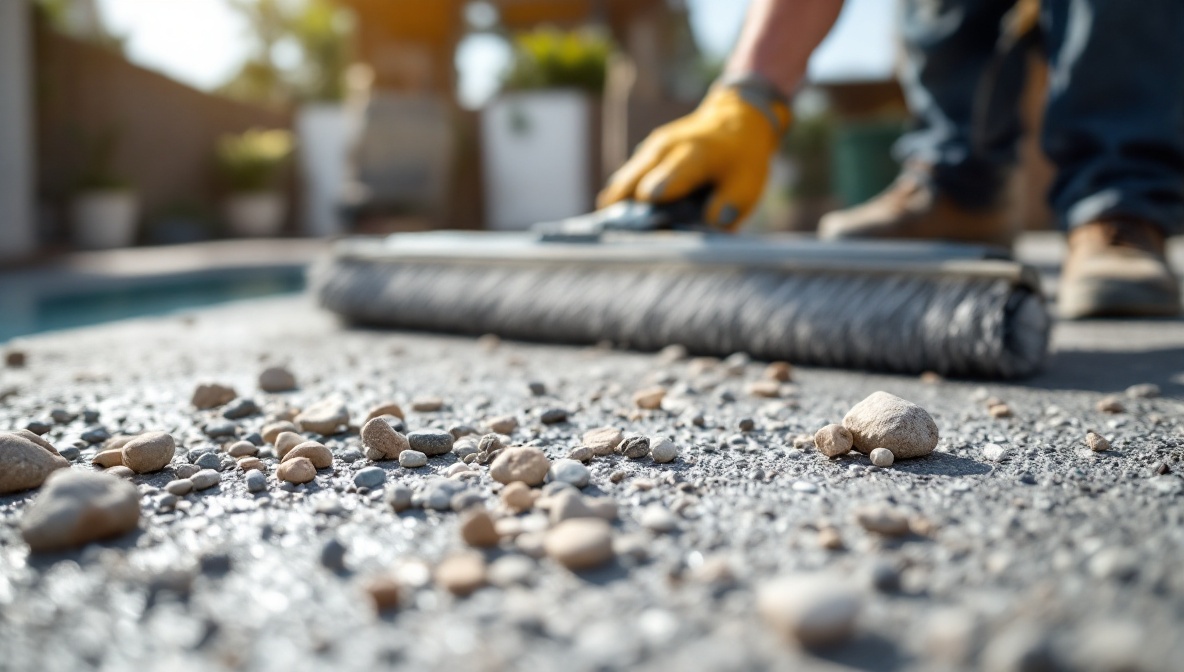
A top layer of the concrete is washed away to expose decorative pebbles, gravel, or stones embedded in the matrix. This finish looks sophisticated, provides excellent traction (ideal for pool areas), and hides dirt better than solid colors. Exposed aggregate is especially popular in coastal neighborhoods because the porous surface sheds water quickly, reducing salt accumulation.
Colored Concrete
Integral pigments or liquid stains create warm terra cotta, cool gray, or accent colors. Colors fade in San Diego sun, so expect reapplication every 5–7 years if color consistency matters.
Permitting & Legal Requirements for San Diego Patios
San Diego Municipal Code requires permits for most patio projects. Knowing the rules avoids costly delays and fines.
When Permits Are Required
- Patios over 200 sq ft require a development permit.
- Patios attached to a house (within 5 feet of foundation) require a structural permit.
- Any patio within 10 feet of a property line in some neighborhoods requires surveying.
- Work in hillside overlay zones (Torrey Pines, Carmel Mountain, Mt. Helix areas) requires environmental review.
Timeline & Costs
Permitting typically takes 2–4 weeks from submission. Fees depend on project scope. Two building inspections (subbase and final concrete pour) are standard. Unpermitted work can result in stop-work orders and fines if discovered during a property sale or insurance claim.
Always hire a contractor familiar with your neighborhood’s rules. La Jolla, Del Mar, and Rancho Santa Fe have stricter architectural review standards than inland neighborhoods.
Ready to Start Your Patio Project?
Get expert guidance from our San Diego concrete team
Installation Timeline: How Long Does a Concrete Patio Take?
A typical patio project in San Diego spans 2–4 weeks from contract to completion, depending on weather and permit delays.
Week 1: Site Prep & Permits
After contract signing, the contractor files permits and schedules inspections. Site prep—excavation, grading, compaction of the subbase—takes 1–3 days. San Diego’s stable soil (clay and sandy soil common in inland areas) requires less grading than hillside homes.
Week 2: Forms & Rebar (If Needed)
Contractors set wooden or aluminum forms to define the patio perimeter and slope. Reinforcement (wire mesh or rebar) is laid if the slab thickness exceeds 4 inches or if there’s soft soil underneath. This phase takes 2–3 days and requires a building inspection before concrete is poured.
Week 3: Concrete Pour & Finishing
A concrete truck delivers the mix (typically 5–10 cubic yards for a 300 sq ft patio). Finishing—screeding, floating, broom-finishing, or stamping—happens the same day while concrete is still plastic. San Diego’s mild weather (rarely below freezing) is ideal for concrete curing. Final inspection occurs 7–14 days after the pour.
Week 4: Curing & Sealing
Concrete reaches 80% strength in 7 days but should cure fully (28 days) before heavy use. A good contractor applies a penetrating sealer 14 days after the pour to protect against salt spray and UV. Your patio is ready for furniture, grills, and entertaining by week 4.
Permit delays (especially in Coastal Overlay Zone projects) can extend timelines to 6–8 weeks. Spring (March–May) and fall (September–October) are the busiest seasons—expect longer wait times for contractor scheduling.
Maintenance & Long-Term Care for San Diego Patios
Proper maintenance extends concrete patio life, especially in coastal neighborhoods.
Annual Maintenance
- Sweeping & rinsing: Remove salt deposits and debris monthly, especially after coastal winds or rain.
- Pressure washing: Clean the surface at 1,500–2,000 PSI annually (high pressure can damage decorative finishes—use caution).
- Crack inspection: Small hairline cracks are normal. Cracks wider than 1/8 inch should be sealed with polyurethane or epoxy to prevent water penetration.
Resealing Schedule
Apply a penetrating sealer every 2–3 years in coastal areas (Pacific Beach, Ocean Beach, Mission Beach) and every 3–5 years inland. Decorative sealers (for stamped or stained concrete) may need refreshing every 1–2 years if you want color vibrancy to remain consistent.
Addressing Salt Damage
If spalling (small flakes of concrete separating from the surface) appears, have it professionally repaired. Patches can be cosmetic for light spalling but may indicate deeper corrosion if severe. Resurfacing (grinding and recoating) can extend your patio’s life.
A well-sealed concrete patio in San Diego requires minimal maintenance compared to wood decks (prone to rot and termites) or pavers (which shift and trap weeds).
Concrete Patio vs. Other Outdoor Surfaces: Why Concrete Wins in San Diego
Concrete isn’t the only patio option, but it’s the most practical for San Diego’s climate and property values.
Concrete vs. Pavers
Pavers (concrete, stone, or brick) cost more installed and require a sand base that shifts over time, creating uneven surfaces and weeds. Concrete is flatter, more durable, and costs less. However, pavers offer more design flexibility and are easier to replace individual units if damaged.
Concrete vs. Decking
Wooden decks cost more and require annual staining, seal maintenance, and termite inspections—critical in Southern California. Concrete requires less upkeep and lasts longer.
Concrete vs. Porcelain Pavers
Large-format porcelain tiles create high-end aesthetics and cost more installed. They’re frost-resistant (important for mountain communities like Julian or Ramona) but more expensive than stamped concrete and prone to chipping in high-traffic areas. For most San Diego patios, stamped concrete delivers similar aesthetics at a lower cost.
For detailed comparisons, see our guide on concrete vs. pavers in San Diego which covers durability, maintenance, and cost-per-year analysis.
Hiring the Right Contractor: What to Look For
San Diego has hundreds of concrete contractors. Finding one with local experience, transparent pricing, and proper licensing saves headaches and money.
Credentials & Licensing
Ask for the contractor’s California State License Board (CSLB) number. Verify it on the official CSLB website. A valid Class B (General Contractor) or Class C-8 (Concrete Contractor) license is essential. Uninsured or unlicensed operators may undercut prices, but you’re liable if someone is injured on your property.
Local References & Portfolio
Request photos of completed patios in your neighborhood. Drive by or call recent clients to ask about scheduling, cleanup, and post-project service. Contractors with 10+ years of San Diego experience understand coastal salt damage, permit requirements, and seasonal weather patterns.
Written Estimates
Obtain itemized quotes from at least three contractors. Red flags include vague pricing, no mention of permits, or unusually low bids that seem unrealistic. A legitimate estimate should detail subbase prep, concrete mix design, finish type, sealing, and permit handling.
Insurance
Verify the contractor carries general liability insurance and worker’s compensation—it protects you if someone is injured during the project.
Visit our San Diego concrete contractor guide for more details on how to vet local specialists.
Patio Considerations by San Diego Neighborhood
Concrete patio styles and challenges vary across San Diego. Here’s what to expect in different areas:
North Park & Normal Heights
These trendy neighborhoods favor stamped or decorative concrete. Many homes have small, sloped backyards (requiring grading and proper drainage). Permits are straightforward; no coastal complications.
La Jolla & Del Mar
High-end coastal patios often include exposed aggregate or colored concrete with integrated lighting. Salt spray is a major consideration. Architectural review adds 2–4 weeks to permitting. Many homeowners add decorative pavers or steel edging.
Pacific Beach & Ocean Beach
Salt air dominates here. Simple, durable finishes (broom or light exposure aggregate) are most practical. Properties near the sand have active drainage needs. Sealing is critical and should be done annually.
Mission Valley & Hillcrest
Inland neighborhoods have stable, well-drained soil. Permitting is quick. Design-forward stamped or stained concrete is popular. No salt-related degradation means longer intervals between sealing (every 3–5 years).
Rancho Penasquitos & Sabre Springs
Northeast neighborhoods have larger properties and HOA architectural standards. Patios often tie into pool decks or multi-level designs, requiring more complex site prep. Stamped concrete is standard. Survey and HOA approval add 3–6 weeks to the timeline.
Cost Savings Tips Without Sacrificing Quality
If budget is tight, here are legitimate ways to reduce costs:
- Smaller size: A smaller patio costs less and still provides functional outdoor space. You can expand later if desired.
- Simple finish: Broom finish costs less than stamped concrete and is highly durable. You don’t sacrifice longevity, only visual flair.
- Off-season timing: Schedule patio work in winter (November–February) when contractors have more availability and may offer discounts.
- DIY demolition: If you’re removing an old patio, ask the contractor if you can handle demolition yourself. This can save labor cost.
- No decorative stain initially: Pour plain gray concrete now; add stain or seal upgrades in 2–3 years when you’ve saved funds. Sealing quality concrete is always possible later.
Avoid cutting corners on subbase prep or using low-quality concrete mix. These are the foundation of your patio’s longevity and will cost far more to repair than the initial savings.
Frequently Asked Questions About Concrete Patios in San Diego
How long does concrete take to cure before I can use my patio?
Concrete reaches 80% strength within 7 days and is ready for light use (walking, light furniture). Full curing takes 28 days, after which you can place hot tubs, heavy furniture, or run grills. In San Diego’s mild climate, 14–21 days is practical for most residential use.
Does my concrete patio need a permit in San Diego?
Yes, if the patio is over 200 sq ft or attached to your house (within 5 feet of the foundation). Permits require two inspections. Check with your city (San Diego, Chula Vista, Carlsbad, etc.) for exact thresholds. Unpermitted work can complicate future home sales or insurance claims.
How often should I seal my patio in San Diego?
Coastal properties (within 1 mile of the ocean) should seal every 2–3 years due to salt spray. Inland patios can go 3–5 years between sealing. If your patio is stamped or stained, seal it every 1–2 years to maintain color vibrancy. Penetrating sealers are invisible and protect without changing appearance.
Can I repair a cracked concrete patio, or do I need a new one?
Hairline cracks (under 1/8 inch) can be sealed with polyurethane caulk and monitored. Wider cracks or spalling (flaking) can be patched depending on area. If cracks are numerous or accompanied by settlement, resurfacing may be more cost-effective than full replacement. Full removal and pour costs more, making partial repair logical for isolated damage.
What’s the best finish for a patio near the ocean?
Exposed aggregate is ideal for coastal patios because it sheds water quickly, resists salt corrosion, and provides slip resistance. Broom finish is the next best option—simple, durable, and low-maintenance. Avoid light-colored stamped patterns in high-salt areas, as they show efflorescence (white salt stains) more obviously and require frequent sealing.
Can I pour a concrete patio in winter in San Diego?
Yes. San Diego’s winter temperatures rarely drop below 40°F at night, which is suitable for concrete curing. Avoid pouring during heavy rain (which weakens the mix). November, December, and February are ideal because temperatures are stable and you’re less likely to hit rare frost. January can be wetter; March–October are hot, requiring faster finishing and curing strategies.
How much value does a concrete patio add to my San Diego home?
A well-designed patio can add to perceived property value. Return is higher in neighborhoods where outdoor entertaining is standard (coastal, North Park, Mission Hills) and for patios that expand functional square footage or improve curb appeal.
Get Your Concrete Patio Project Started Today
SD Concrete Pros delivers quality patios across San Diego neighborhoods. Free estimates, transparent pricing, and licensed installation.
619-848-3880 Related: Decorative Concrete San Diego: Stamped, Stained & Custom Designs
Related Articles
Decorative Concrete San Diego
Decorative concrete in San Diego transforms driveways, patios, and pool decks with stamped patterns, stains, and custom designs. Learn costs, options, and durability for your project.
Read More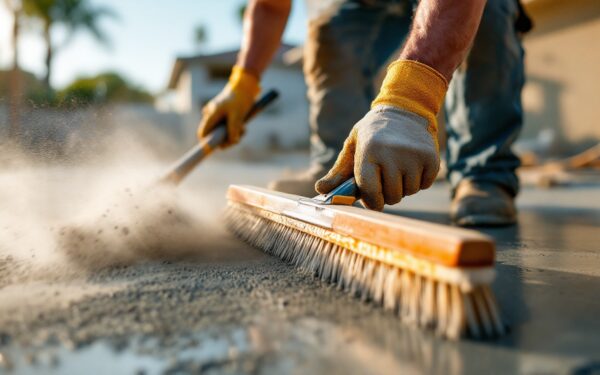
Exposed Aggregate Concrete: A San Diego Homeowner’s Guide
Exposed aggregate concrete in San Diego costs $8–$15 per square foot installed. Learn how this durable, decorative finish works, what it costs, maintenance requirements, and whether it's right for your patio, driveway, or pool deck.
Read More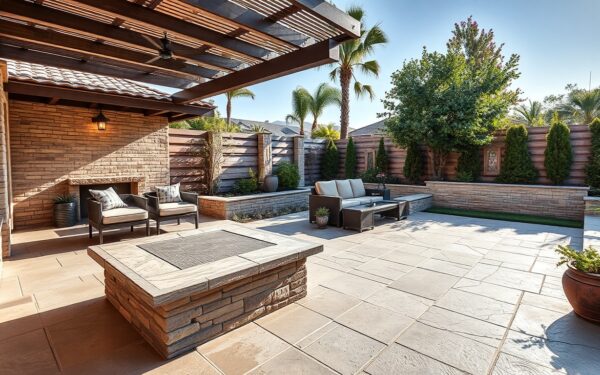
Stamped Concrete Patio Ideas for San Diego Backyards
Discover popular stamped concrete patio designs for San Diego homes. Learn about pattern options, color combinations, cost, and maintenance tips for your backyard.
Read More