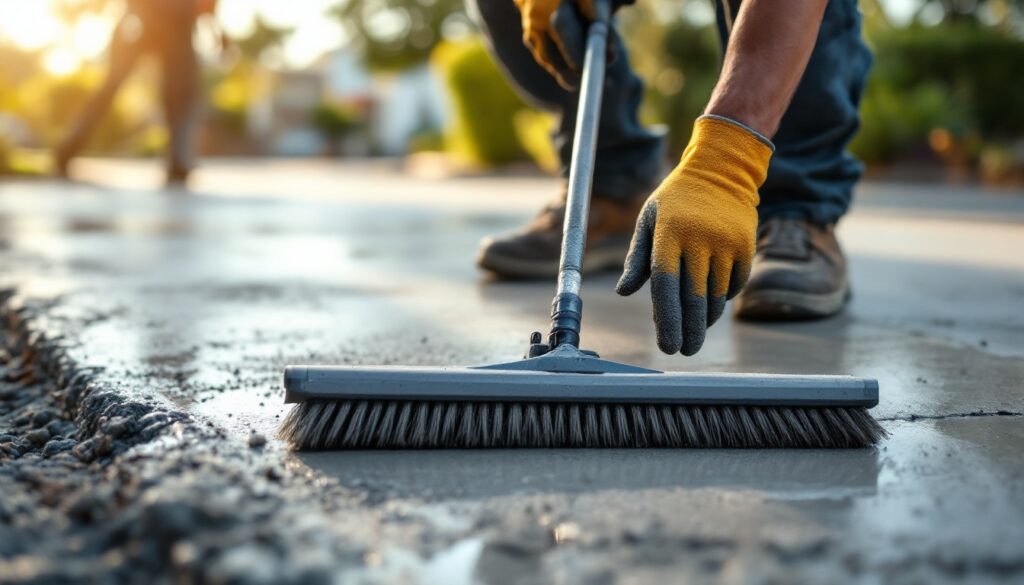
A concrete contractor San Diego professional handles everything from driveway installation and patio repair to commercial concrete work across San Diego County. Hiring the right contractor can save you rework costs and ensures your project meets city code and lasts 30+ years. This guide walks you through vetting contractors, understanding pricing, licensing, and avoiding common pitfalls in 2026.
What Does a Concrete Contractor Do?
A concrete contractor San Diego specializes in concrete placement, finishing, and repair. They handle site preparation, forming, pouring, finishing (broom, trowel, stamped, or exposed aggregate), and curing. Many also perform concrete removal and resurfacing.
Contractors differ from concrete laborers: contractors manage the full project, obtain permits, coordinate inspections, and carry liability insurance. A licensed contractor is bonded and insured; a handyman or unlicensed worker is not.
- Driveways: New installation, resurfacing, repair, sealcoating
- Patios & decks: Stamped, stained, exposed aggregate finishes
- Foundations & slabs: Residential and light commercial
- Commercial concrete: Parking lots, loading docks, warehouse floors
- Decorative: Stamped patterns, colored concrete, epoxy overlays
Concrete Contractor San Diego: Licensing & Credentials
California requires concrete contractors to hold a California State Licensing Board (CSLB) C-8 license (Concrete Contractor) or C-54 (Masonry) depending on scope. Check any contractor’s license at cslb.ca.gov. A valid license confirms they’ve passed exams, maintain bonding, and carry workers’ comp insurance.
Always verify a contractor’s license number and active status before signing a contract.
What to Verify
- License number: Must appear on all bids and contracts
- Active status: Check CSLB database — suspended or expired licenses are a red flag
- Workers’ Comp: Required if they employ workers; verify at dir.ca.gov
- General liability insurance: Request current Certificate of Insurance
- Bonding: Protects you if the contractor abandons the project
San Diego Concrete Contractor Pricing: What You’ll Pay
Concrete driveway costs in San Diego vary with several factors. Here’s what drives the final price.
Factors That Affect Your Quote
- Site preparation: Existing concrete removal, leveling, or grading adds cost
- Concrete grade: 4-inch standard slab vs. thicker specialty work
- Finish type: Broom finish (simplest), trowel, stamped pattern, or exposed aggregate (premium)
- Color & stain: Integral color or acid stain adds cost
- Reinforcement: Fiber mesh, rebar, or wire mesh increases cost
- Slope & drainage: Complex slopes or drainage design cost more
- Access & site conditions: Narrow gates, steep grades, or tight spaces raise labor
- Permits & inspections: San Diego requires building permits for most work
Permits & Code Requirements in San Diego County
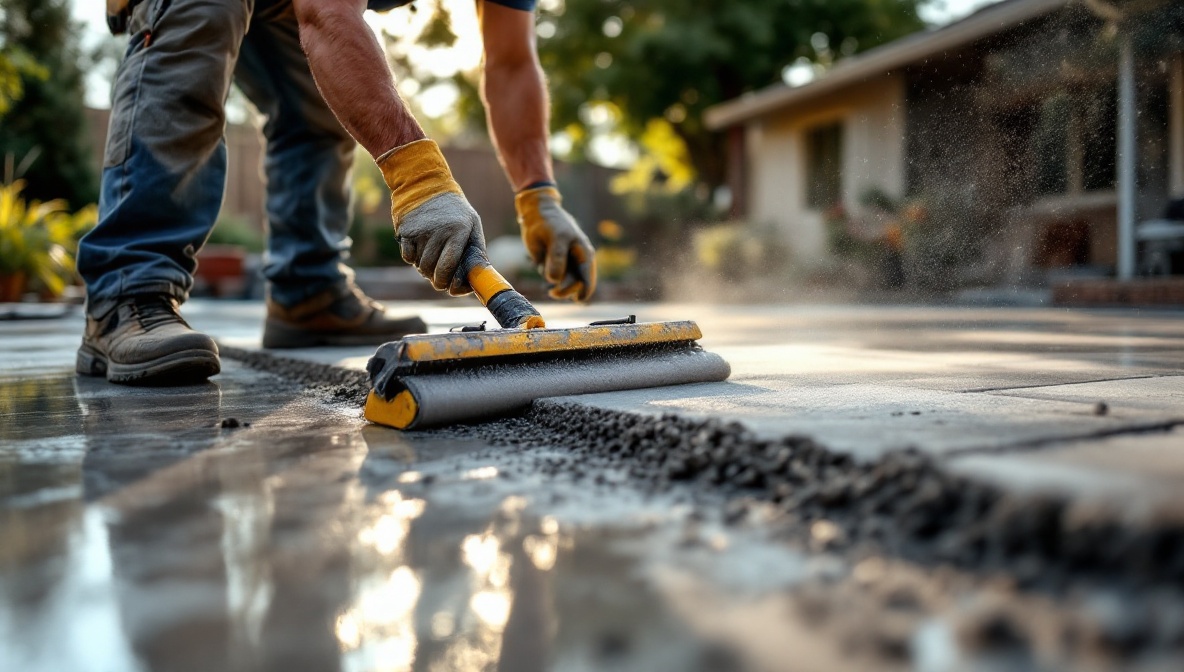
San Diego requires permits for driveways, patios, and structural slabs. Unpermitted work voids insurance claims and can block home sales. A licensed concrete contractor handles permits as part of their service.
When Permits Are Required
Driveway: Permit required for new or replacement over 500 sq ft. City inspects proper slope (1/8 inch per foot) and reinforcement.
Patio: Structures under 200 sq ft and 30 inches high may be exempt; over that requires permit. Check with your city (San Diego, Chula Vista, Carlsbad all have different thresholds).
Pool decks & foundations: Always require permit and inspection.
Commercial work: Always requires permit and ongoing inspections.
Ready to Get Started?
Let SD Concrete Pros handle your project with CSLB licensing and full permits included
How to Find & Vet a Concrete Contractor in San Diego
Start with referrals from neighbors, real estate agents, or landscape companies. Check online reviews on Google, Yelp, and Better Business Bureau. Request bids from at least three contractors.
Questions to Ask Every Contractor
- What is your CSLB license number? (Verify it before talking further)
- How long have you been in business? (5+ years preferred for reliability)
- How many concrete projects have you completed in San Diego? (Ask for local references)
- Will you obtain and manage all permits? (Cost should be transparent)
- What warranty do you offer?
- Who performs the work—you or subcontractors? (Direct crew is often better quality control)
- What is included in your estimate? (Material, labor, cleanup, sealing?)
- What payment schedule do you use? (Deposit, mid-project, final—avoid paying 100% upfront)
- Do you have liability insurance and workers’ comp? (Request current certificates)
- What if concrete cracks or settles after completion? (Understand their remedy policy)
Red Flags When Hiring a Concrete Contractor San Diego
Avoid contractors who can’t or won’t provide a CSLB license. Never hire someone offering “cash discount” to skip permits—it’s illegal and leaves you liable. Watch for suspiciously low bids; concrete costs are market-driven, and underbids often mean cut corners.
- No CSLB license or license is suspended/expired
- Refuses to obtain permits or suggests skipping them
- Pressure to pay 100% upfront or large non-refundable deposit
- No written estimate or contract
- Cannot provide local references or portfolio
- Bid is 30%+ lower than other quotes (suggests inferior materials or poor execution)
- No liability insurance or workers’ comp certificate
- Vague on warranty or refuses written warranty terms
- No phone number, business address, or established business entity
Comparing Concrete Contractor Bids in San Diego
A detailed bid should break down materials, labor, site prep, permits, and finishing. Compare three contractors on scope, not just price. The lowest bid often means the contractor cuts concrete thickness, skips reinforcement, or rushes curing—leading to cracks and failure within 5 years.
What a Professional Bid Includes
- Square footage and depth of concrete
- Concrete grade (PSI strength) and air entrainment (freeze-thaw protection)
- Reinforcement type (fiber, rebar, wire mesh)
- Finish type (broom, trowel, stamped, exposed aggregate)
- Site prep and removal costs (if applicable)
- Permit and inspection costs
- Labor hours and daily work schedule
- Sealing or curing compound (included or extra)
- Warranty terms (labor and material coverage)
- Payment schedule and total project cost
A bid missing these details isn’t worth considering. The lowest-priced concrete contractor San Diego isn’t always the better value. You’re paying for experience, code compliance, and durability.
Concrete Types & Finishes: Understanding Your Options
San Diego’s climate—mild winters, occasional rain, summer heat—suits most concrete finishes. Here’s what contractors offer and when each makes sense.
Standard Finishes
Broom finish: Textured surface for slip resistance. Simplest option. Well suited to driveways and paths. Cost: base price.
Trowel finish: Smooth, polished appearance. Great for patios and decorative work.
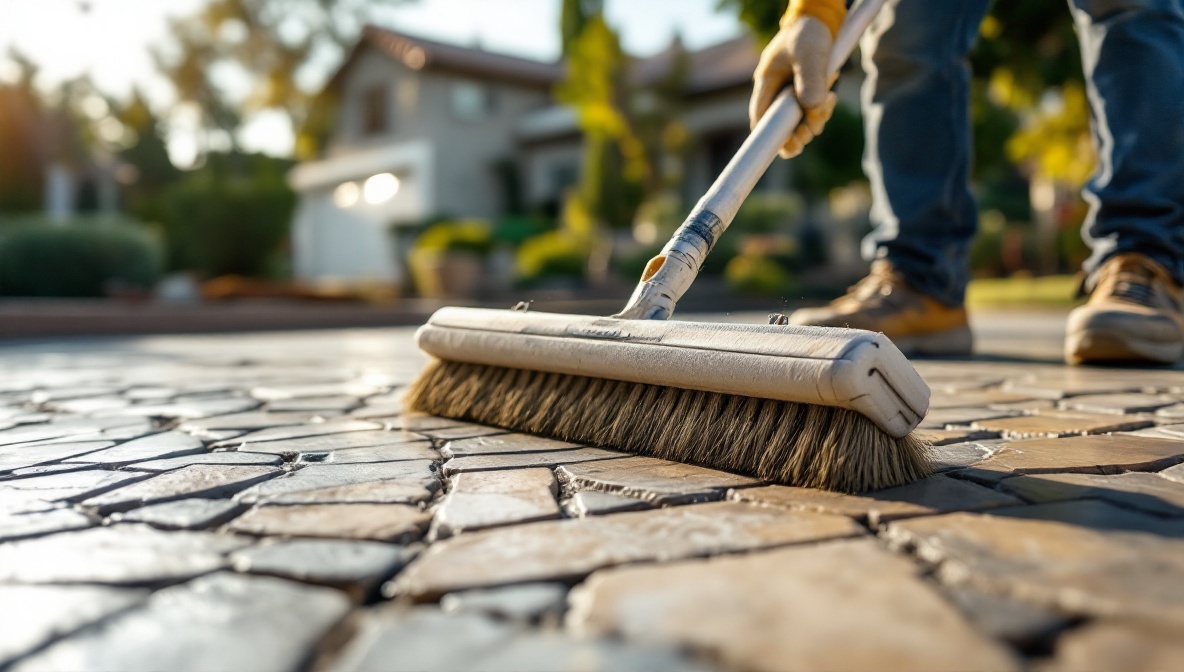
Stamped concrete: Imprints stone, brick, or tile patterns. Premium look. Popular in San Diego for upscale patios and pool decks.
Exposed aggregate: Decorative pebbles visible on surface. Slip-resistant, elegant. Check our exposed aggregate concrete guide for more details.
Stained or colored concrete: Acid stains or integral color for custom hues. Popular in contemporary San Diego homes.
Concrete Contractor San Diego: Timeline & What to Expect
A typical driveway or patio project takes 5–14 days from start to finish. Permit approval (if required) adds 1–4 weeks. Weather delays are common in San Diego during winter or rain.
Typical Project Schedule
- Week 1: Site prep, permit application submitted
- Week 2–3: Permit approval; forming and reinforcement placed
- Week 4: Concrete pour and initial finishing
- Week 4–5: Curing period (minimum 7 days before use; 28 days for full strength)
- Week 5–6: Final inspection, sealing (if included), cleanup
Delays happen: weather, soil conditions, city inspector schedule. A good contractor builds buffer time into estimates.
Long-Term Maintenance
Concrete naturally develops hairline cracks as it cures and settles; this is normal and doesn’t indicate failure.
To extend concrete life in San Diego, seal your driveway every 2–3 years. Sealing prevents water intrusion and UV damage, significantly extending concrete lifespan. Learn more about concrete driveway lifespan in San Diego.
Maintenance Tips
- Seal driveways within 1 month of install, then every 2–3 years
- Clean spills promptly (oil, salt, harsh chemicals damage concrete)
- Avoid de-icing salts in winter; use sand if needed
- Fill small cracks with concrete caulk before they spread
- Never use a pressure washer over 3000 PSI (damages surface)
- For patios, sweep regularly and reseal as needed
Concrete Contractor San Diego vs. DIY: Why Hire a Pro
Concrete work looks simple but requires precision in forming, slope, reinforcement, and finishing. A 1-inch variation in slope causes pooling. Wrong concrete mix in San Diego’s heat fails early. DIY mistakes can cost more to repair than hiring a licensed contractor upfront.
Contractors bring:
- CSLB licensing and liability insurance (protects your property)
- Proper equipment: mixers, screeds, vibrators, finishing tools
- Knowledge of San Diego soil, drainage, and freeze-thaw cycles
- Permit and code expertise (avoid costly violations)
For small repairs or resurfacing, concrete driveway repair may be DIY-friendly. For new installation or structural work, hire a licensed concrete contractor San Diego.
Concrete vs. Alternative Materials in San Diego
Homeowners often compare concrete to pavers, asphalt, or stamped stone. Concrete is cheaper upfront than pavers, lasts longer, and requires less maintenance. See our guide on concrete vs. pavers for San Diego driveways for a full breakdown.
In San Diego’s mild climate, concrete is the most cost-effective choice for driveways and patios. Asphalt requires periodic resurfacing. Pavers shift in clay soil and cost more.
Local Concrete Contractors in San Diego Neighborhoods
SD Concrete Pros serves all of San Diego County: downtown, Mission Valley, La Jolla, Del Mar, Chula Vista, Carlsbad, and beyond. Neighborhoods like Coronado, Ocean Beach, and Pacific Beach have unique drainage and soil challenges requiring local expertise. Always hire contractors familiar with your area’s building codes and climate.
Get Your Free Concrete Estimate Today
Full permits included, free estimate.
Frequently Asked Questions
How long does concrete take to cure in San Diego?
Concrete reaches 70% strength in 7 days and full strength in 28 days. San Diego’s mild climate speeds curing compared to colder regions. Avoid heavy use for at least one week. Sealing can begin after 30 days.
Do I need a permit for a concrete patio in San Diego?
Yes, if your patio exceeds 200 square feet or is raised. Shed slabs under 200 sq ft and 30 inches high may be exempt. Check your city’s building department—thresholds vary between San Diego, Chula Vista, and Carlsbad.
How much does concrete resurfacing cost in San Diego?
Resurfacing (overlay) cost depends on the size of the area and the condition of the base. If the base needs repair first, expect added cost.
What is the best concrete finish for San Diego driveways?
Broom or trowel finish is standard and durable. Stamped concrete looks premium and costs more. Exposed aggregate offers excellent slip resistance in rain. All perform well in San Diego’s climate.
How do I know if a concrete contractor is licensed in California?
Check the CSLB database at cslb.ca.gov and enter their license number. Verify they hold a C-8 (Concrete Contractor) or C-54 (Masonry) license with active status. Always confirm before hiring.
Related Articles
Hiring a Licensed Concrete Contractor in San Diego: What to Know
Learn how to hire a licensed concrete contractor in San Diego. Verify CSLB credentials, get competitive quotes, and avoid costly mistakes with our expert guide.
Read More
How Long Does a Concrete Driveway Last in San Diego?
A concrete driveway in San Diego typically lasts 25–40 years with proper maintenance. Climate, installation quality, and seal coating frequency determine whether yours reaches the upper or lower end.
Read More
Pool Deck Concrete Contractors in San Diego: Local Guide
Find expert pool deck concrete contractors in San Diego. Learn costs, materials, durability, and how to choose the right contractor for your backyard project.
Read More