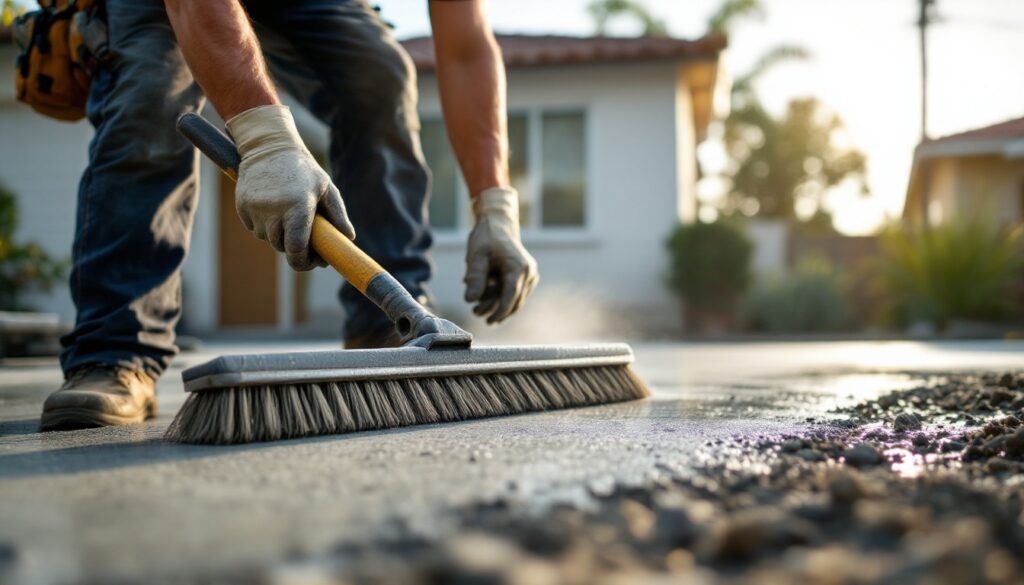
Concrete vs pavers San Diego driveway materials represent the two most popular choices for residential driveways in Southern California. The final cost depends on site prep, finish type, and local labor rates. Understanding the tradeoffs between these two options helps you make the right decision for your property’s climate, budget, and aesthetic.
- Concrete: low maintenance, 25–30 year lifespan, smooth or stamped finishes
- Pavers: moderate maintenance, 25–50 year lifespan, highly customizable design
- Climate Factor: San Diego’s mild temps favor both, but salt air near the coast affects concrete more
- Best for: Concrete = budget and simplicity; pavers = design flexibility and drainage
- Repair: Concrete patches visible; individual pavers replace cleanly
Concrete Driveway San Diego: Cost and Installation
The cost of a concrete driveway in San Diego varies widely. The range reflects four major variables: subbase preparation (compacted gravel and soil stabilization), square footage, finish type (broom finish vs. stamped concrete), and permitting requirements.
Broom-finish concrete (the standard textured surface) sits at the lower end. Stamped concrete San Diego installations, which mimic brick, slate, or stone patterns, cost more because they require a release agent, stamping molds, and extra labor time. Your driveway’s subgrade and the existing landscape condition matter significantly. A site requiring full excavation and new French drain installation costs more than one with stable, well-draining soil.
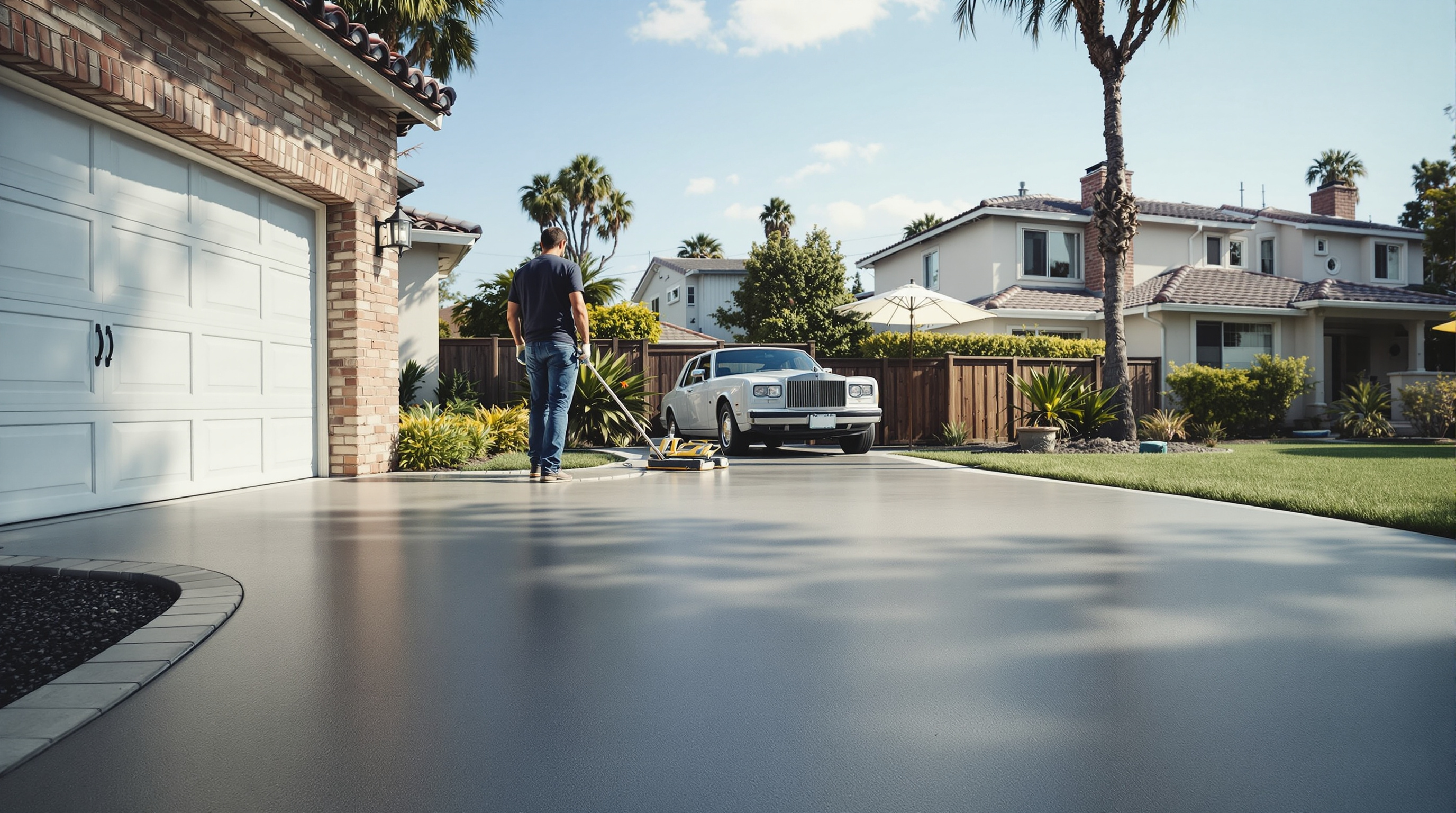
San Diego County does not require a permit for standard concrete driveway replacement under 50 cubic yards, but check with your local city code. Carlsbad, Chula Vista, and Encinitas sometimes impose stricter rules if the work borders sensitive habitats or flood zones. Stamped concrete or colored concrete may trigger a design review in some neighborhoods. SD Concrete Pros includes permit research in every free estimate to avoid surprises.
Paver Driveway San Diego: Design and Durability
Pavers (typically porcelain, natural stone, or large-format concrete units) require precise base preparation: a 4–6 inch compacted gravel subbase, landscape fabric, polymeric sand, and edge restraint. The labor-intensive installation process justifies the premium over poured concrete.
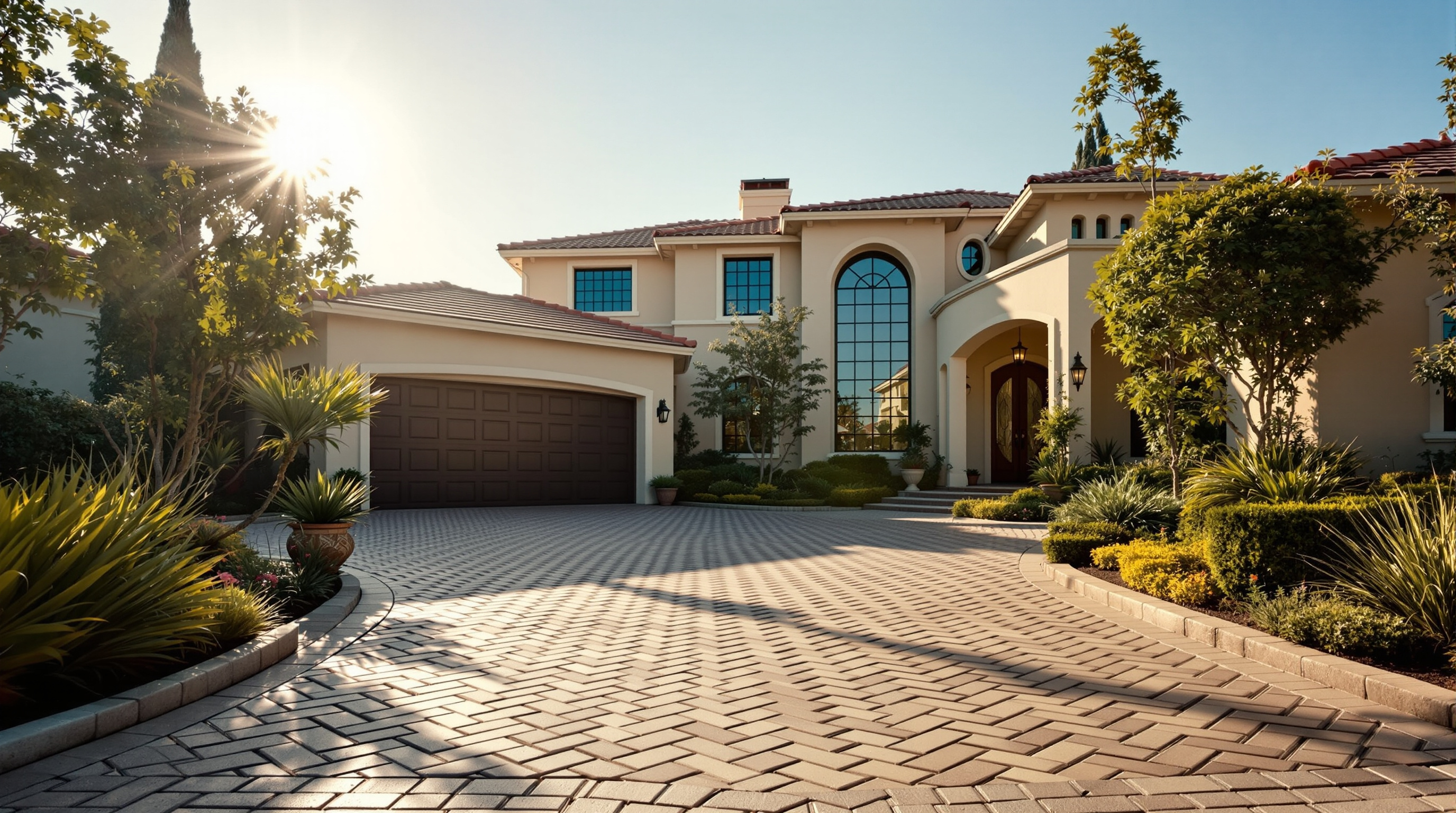
The payoff is design freedom and longevity. A paver driveway can be laid in herringbone, basketweave, running bond, or custom geometric patterns. Unlike stamped concrete (which is one continuous surface), pavers allow you to swap individual units if one cracks. In coastal San Diego neighborhoods like La Jolla or Pacific Beach, homeowners often prefer pavers because salt spray and freeze-thaw cycles (rare but possible in winter) damage monolithic concrete more visibly. Pavers naturally shed water between joints, reducing pooling in clay-heavy soils.
Durability leans slightly toward pavers. Quality porcelain or natural stone pavers last 25–50 years with proper sand maintenance. Concrete typically endures 25–30 years before significant cracking or scaling appears, especially in coastal areas. Both materials withstand San Diego’s hot, dry summers without issue; the threat is occasional rain and the rare freeze event.
Maintenance: Concrete vs Pavers Driveway
Concrete driveways demand minimal ongoing care: annual sweeping, occasional power washing (every 2–3 years), and sealing every 2–3 years to prevent moisture penetration and UV damage. Sealing adds 5 years to the surface life. Stains from oil, rust, or tree sap etch into concrete permanently unless sealed immediately.
Paver maintenance is more hands-on. Polymeric sand between joints must be topped up every 1–2 years. Pavers shift slightly under traffic, so re-sanding maintains water drainage and prevents weed growth. Algae or moss accumulation in shaded areas requires periodic cleaning. Individual pavers can be replaced if cracked, whereas a concrete patch on a visible driveway is always noticeable.
Aesthetic Comparison: Concrete vs Pavers
Standard concrete offers a clean, modern look in gray or with integral color (adding pigment during the mix). Decorative concrete San Diego, stamped, stained, or scored, mimics expensive materials like slate, brick, or wood at a fraction of the cost. A stamped concrete driveway can replicate natural stone so convincingly that many homeowners choose it for curb appeal without the paver price tag.
Pavers provide unmatched design customization. Mix colors, blend materials (concrete and porcelain), or create borders and inlays. A paver driveway signals premium finish and appeals to high-end home buyers. However, if aesthetics are your sole driver, stamped concrete delivers much of the visual impact at a lower cost.
| Feature | Concrete | Pavers |
|---|---|---|
| Installation Time | 1–2 days | 3–5 days |
| Lifespan | 25–30 years | 25–50 years |
| Maintenance | Low (seal every 2–3 years) | Moderate (re-sand, clean) |
| Design Options | Stamped, stained, colored | Unlimited patterns and colors |
| Drainage | Requires slope or French drain | Natural between joints |
Ready to Choose Your Driveway?
Get a free in-person estimate and let our experts guide you through both options.
Which Material Suits San Diego’s Climate?
San Diego’s mild Mediterranean climate (average winter low 48°F, summer high 77°F) favors both materials. Freeze-thaw cycles are extremely rare, so frost heave and spalling are not primary concerns. The real threat is salt air in coastal neighborhoods and occasional heavy rain causing subsurface water damage.
In Oceanside, Carlsbad, or La Jolla, pavers outperform concrete because salt spray etches exposed concrete over 15–20 years. Sealed concrete stands up better than unsealed, but pavers sidestep the issue entirely by distributing water drainage through joints. Inland areas (Escondido, Ramona, inland Poway) see less salt exposure, so concrete excels due to lower cost and simpler maintenance.
UV exposure is moderate in San Diego, but direct sun will fade integral color in concrete. Stamped and stained finishes require high-quality sealer to maintain color over time. Pavers resist UV fading better, especially porcelain units with factory-baked color.
Permitting and HOA Approval in San Diego
San Diego municipal code exempts standard concrete driveways under 50 cubic yards from building permits. However, Chula Vista, Carlsbad, Encinitas, and Solana Beach impose stricter rules. If your driveway project involves decorative concrete San Diego (stamped, colored, or stained), check with your city’s development services.
HOA-governed communities often have design guidelines that favor one material over the other. Coastal and upscale neighborhoods (Rancho Santa Fe, Coronado, Mission Hills) frequently require pavers or stamped concrete to match neighborhood aesthetics. Get HOA approval in writing before work begins. Early coordination beats removal and replacement.
Permitting timelines: San Diego County processes most residential driveway permits within 1–2 weeks. Pavers and concrete contractor San Diego firms typically manage permitting at no extra cost and include it in the estimate.
Long-Term Value: 20-Year Cost Analysis
Over 20 years, concrete typically costs less in total cost of ownership, since pavers need ongoing sand maintenance. However, pavers likely won’t need replacement within 20 years if installed correctly, while concrete may require more extensive patching as it ages.
The decision hinges on your priorities. Budget-conscious homeowners choose concrete. Design-focused and long-term investors choose pavers. In San Diego’s stable climate, either choice will deliver a functional driveway for two decades if properly maintained.
Why Hire SD Concrete Pros for Your Driveway Project
Choosing between concrete and pavers requires local expertise. San Diego’s coastal salt air, clay soils in some neighborhoods, and strict HOA rules demand a contractor who understands the specifics.
Our free estimates include a detailed site assessment, material recommendations tailored to your location and soil type, and a written timeline. We handle permitting, and ensure proper drainage. Whether you’re leaning toward concrete or pavers, we’ll show you real photos of similar projects in your neighborhood so you can visualize the result.
Ready to Get Started?
Call us today for a free estimate and site consultation.
Frequently Asked Questions
How long does a concrete driveway last in San Diego?
Are pavers worth the extra cost compared to concrete?
Can I do a concrete vs paver hybrid driveway?
Which driveway material is better for clay soil in San Diego?
Do I need a permit for a concrete or paver driveway in San Diego?
Related Articles
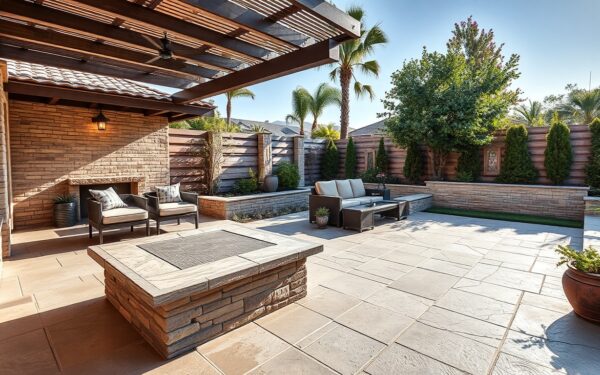
Stamped Concrete Patio Ideas for San Diego Backyards
Discover popular stamped concrete patio designs for San Diego homes. Learn about pattern options, color combinations, cost, and maintenance tips for your backyard.
Read More
Concrete Patio Installation Cost in San Diego
Concrete patio installation in San Diego costs $8 to $18 per square foot, or $2,400 to $5,400 for a 300 sq ft patio. Prep work, finish type, and local permitting impact the final price. Here's what to budget.
Read More
San Diego Concrete Resurfacing: Driveway, Patio & Pool Deck
San Diego concrete resurfacing costs $3 to $7 per square foot and breathes new life into worn driveways, patios, and pool decks. Learn what affects pricing, which surfaces qualify, and why resurfacing beats full replacement.
Read More